About Sneaky Snacks
Quite often, it is the habit of snacking that is linked to the tendency to gain extra kilograms.
Excessive fascination with snacks can even be considered a нарушение пищевого поведения (eating disorder) in some contexts.
After all, we don’t always reach for the refrigerator or a chocolate bar because we are starving and don’t know how to make it to lunch break.
Snacking is indeed associated with a whole set of behavioral distortions. We may eat them quickly and without enough chewing, eat when we are bored, sad, anxious, or simply to stay awake. And also — replace main meals with not always high-quality snacks, which are usually more thought-out and substantial meals.
A separate chapter in the light of quarantine days has become the consumption of snacks while watching movies or series. This is a typical example where chewing is far from always connected with a feeling of hunger.
The greatest disappointment of snacks, however, is not their presence in the diet but what these snacks are most often represented by. If it is pastries, chocolate bars, chips, salted nuts, and other similar products — counting on your jeans fitting after quarantine measures may not work.
The trouble with all these goodies is primarily the insane amount of sugar, salt, and saturated fats.
However, not all is so bad with those snacks if you approach them with measure and common sense. In the Ukrainian recommendations on nutrition it is stated that “the ideal eating pattern is individual for each person,” and that “the interval between main meals should not exceed three and a half — four hours, and there should be 1-2 snacks during the day.”
It is also important to learn to focus on the process of eating. When we combine some activity with eating, this often indeed leads to overeating. Thus, food becomes a comfort, a way of procrastination, or simply an uncontrolled side activity while watching a screen. Therefore it is important to take a break for eating and devote attention to this process.
The speed of eating also affects the amount of food consumed, the fullness you feel, and the reduction of hunger. One should eat slowly, spending 20-30 minutes on main meals and 10-20 minutes on a snack.
And now for the main question — “what to eat to lose weight?”
And, despite the absurdity and some comicality of this question, there is some sensible core here too.
First lifehack — snacks should be taken when you feel hungry and you don’t confuse it with other feelings. When your tempting legs lead you to the fridge again — first of all ask yourself, am I even hungry? When did I last eat something?
Second lifehack — “out of sight, out of mind.” If the advice “just don’t buy all those treats” isn’t for you either, at least try to hide them deep in cupboards and “in reserve,” so they aren’t in front of your eyes. There is a small but real chance that you’ll simply forget about them or get distracted by something else.
Third lifehack — invite yourself to a negotiation. Try, for example, to agree with yourself not to chew in front of the computer monitor (and, by the way, this will save your keyboard from unnecessary misadventures) or while reading a book.
If it’s hard to manage your conditioned reflexes and snacks have a firm place in your reward system, you can set a rule for yourself, for example, to perform a certain exercise or at least drink a glass of water before eating a bar. And it is very likely that after, say, twenty squats you’ll be so inspired that you’ll reconsider even eating that bar.
And, of course, we strive to replace the whole “junk food” with sensible, healthy food. Fruits, dried fruits, unsalted nuts, whole-grain products are sources of fiber, vitamins, and trace elements. The key in all this is fiber, because it provides a “voluminous” feeling of fullness. We do not digest fiber itself, nor do we get extra calories from it. However, it is fermented by our tiny gut bacteria and they will be happy if you give them such a treat. A wonderful option here is also dairy products, ideally without added sugar or with minimal content. They are sources of complete easily digestible protein, calcium, and also the same beneficial bacteria, and they effectively contribute to a feeling of fullness.
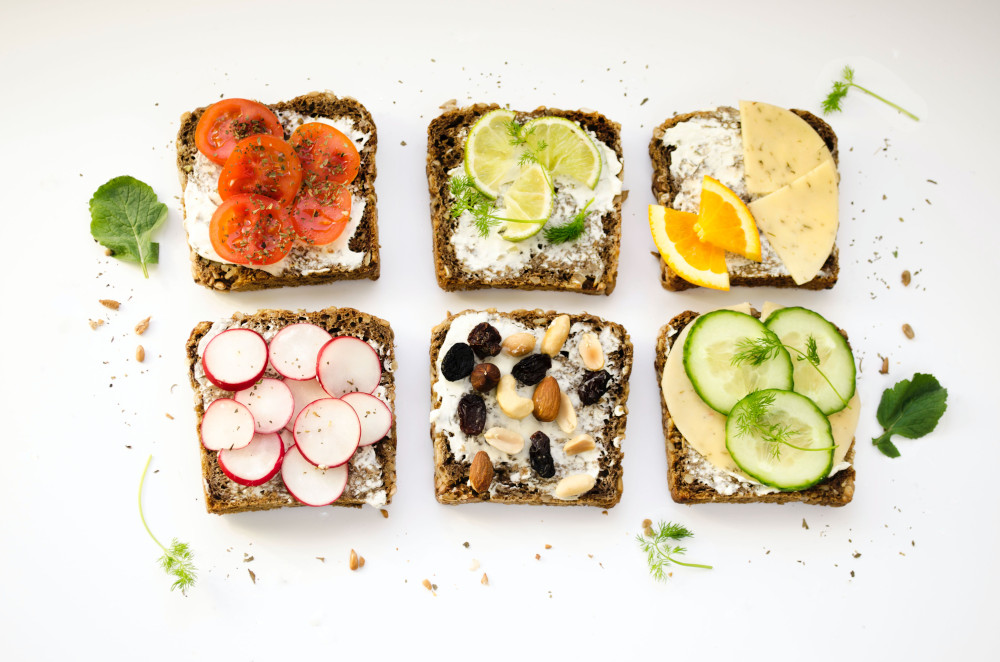
Photo by Ola Mishchenko on Unsplash