About the “beginnings of beginnings”: the development of the intestinal microbiome in children
Somewhere around the 10th week of pregnancy, these little worms, who will someday grow into respectable uncles and aunts, are already actively swallowing amniotic fluid, and all these microbes are starting to master the tiny intestine. Therefore, yes, infectious diseases and antibiotic therapy during pregnancy can also affect the formation of the microbiota of the new organism.
The mode of birth – is one of the critical factors that influence the development of the intestinal microbiome. After passing through the birth canal, the baby is born covered with maternal microbes. Some of them are swallowed, and the colonization of the gastrointestinal tract gains new momentum.
During a cesarean section, the formation of the microbiota proceeds more slowly. Initially, the gut is dominated by microorganisms typical of the skin. Only after some time do lactobacilli, bifidobacteria, and finally the bacteroid landscape come to the fore. In babies born by cesarean section, the degree of relatedness of the microbiota to the maternal one is somewhat lower compared to babies born during vaginal delivery. Such differences are observed in the first two years.
Researchers also note that in children born by cesarean section, there is a higher likelihood of developing atopic conditions and infections, in particular those caused by Clostridium difficile.
Another significant factor, actively studied, which affects the pace of microbiota development, is the method of feeding the infant.
Maternal milk contains many growth factors for the gut microbiota. And naturally, lactobacilli with bifidobacteria are also present there. These are among the microorganisms that are widely known, and some studies say there are hundreds of species in breast milk.
The factor of premature birth and underdevelopment of infants significantly influences the formation of the intestinal microbiome. In preterm babies, microbiota development is delayed, characterized by lower diversity and greater vulnerability to conditionally pathogenic bacteria.
The use of antibiotics is often linked with factors of prematurity and cesarean delivery. Antibiotic use is associated with delays in microbiota development, in particular colonization of the intestine by bifidobacteria, while proteobacteria begin to dominate.
Note: it is important to understand and correlate risks, because the delay in the formation of the microbiota and the likelihood of concomitant disorders are practically negligible in comparison with the possible complications that can be avoided thanks to civilization benefits such as cesarean section, antibiotic therapy, and modern nutrient-rich feeding mixtures.
It is quite fair to expect that, like everything in our lives, our genetics influence the formation of the microbiota. The data in this area come mainly from studies involving genetically identical twins. And there are not many such studies. They say that this influence really exists—the microbiota of identical twins is indeed more closely related than that of fraternal twins.
The environment, geographic location, family structure, hygiene practices in the first years of life play a large role in shaping the gut microbiome.
The presence of older brothers or sisters, as well as animals, contributes to greater microbial diversity. Kissing, hugging, and not overusing cleaning agents and disinfectants positively affect the formation of the gut microbiota and increase the chances that its source will be close people rather than random bacteria brought from the subway.
And it is important to emphasize that creating a “sterile” environment around a young child is often a path to allergic manifestations and dysbiotic phenomena in the future. Because in the first years of life (and especially in the first year) the child’s immunity is being calibrated. It needs contact with a variety of non-pathogenic bacteria to train the immune system. This is how it learns to distinguish its own from others, to regulate the intensity of its reaction to an antigen, so that then, when confronted with each new, still unknown biological molecule, it does not trigger a histamine alarm “just in case.”
This, in fact, explains the so-called hygiene theory of the emergence of allergies, atopic conditions, asthma, and other pathologies associated with disruptions in the inflammatory response. There are many studies and observations on this topic. All these phenomena are characteristic of residents of developed countries where people are used to maintaining hygiene and spending a lot of time indoors. Accordingly, babies mostly spend their leisure in clean, tidy playpens rather than wallowing in mud like their peers in less prosperous countries. Of course, this is not a model to imitate, but one of the prerequisites for the hygiene theory is the fact that farmer children practically do not suffer from asthma and allergies. Bacterial lipopolysaccharides and other fragments of bacterial cell walls, found in large quantities in soil and flour, train the immune system and prevent it from going haywire out of boredom.
There are also interesting studies on the contribution of our domestic animals to this issue. Cats and dogs (more so) exert a protective effect when asthma and allergic manifestations occur in children. Essentially, they are vectors that spread microbes. And this prevents us from becoming excessively microbe-depleted.
Public service announcement: a pet in the home is not only valuable microbes, but also claws and teeth, so never leave a child alone with the animal!
And, taking this opportunity, we add that it is also a great responsibility. If you get a dog, remember that it will need walking and frequent care—because owners’ busyness makes pets’ lives miserable and prone to urinary stones. And we also sincerely believe that you will always use leashes and clean up after your dogs, not exposing others to danger and the possibility of becoming better acquainted with your beloveds’ gut microbiome.
It is also necessary to recognize the difference between factors that enrich a child’s microbiome and those that may expose him to danger. So if you know you are healthy and you share the same spoon, that’s normal. And being in crowded places, especially during epidemic outbreaks, contact with the sick—this is a high risk. Wiping the floor with cleaners and using antibacterial wipes is unnecessary. And washing hands, beards, hygiene of the mobile phone and beard—these are important.
An interesting question is: over what period does all this microbiota formation take place? The answer is: varies. It is believed that by 1 year a child already has their own unique microbial profile, by 2–5 years the intestinal microbiota resembles that of an adult. But in general, the first 3 years are considered the most critical for the formation of the intestinal microbiome.
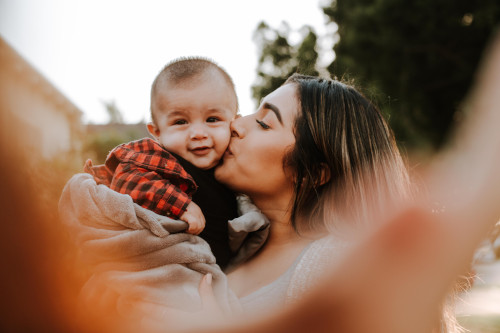
Photo by Omar Lopez on Unsplash