Cats and Microbes
What is the power of cats?
The ability to accept affection and purr — to some extent — is a significant "power" that cats hold over their owners. Another "feature" for cat owners’ comfort is their ability to bury their big and small matters in the sand.
By the way, the evolution of these animals in our home has occurred along all lines, including behavioral ones.
So taking home some small representative of wild felines and expecting to grow a "playful little cheetah" is not worth it: instincts will take their toll and it will still somehow want to have you for lunch. And conscientious animal rights advocates will rightly not leave you in peace about this.
About cat purring
Such pleasant purring to our ears may sound far from only when the cat is feeling good. Purring can be an element of communication (especially with kittens), a way to calm down or relieve pain. Purring is produced only by small domestic cats, as well as pumas, lynxes and cheetahs. Large cats — lions, tigers, leopards — do not do this.
About microbes
Cats are known for being exclusive hosts of Toxoplasma gondii — only cats can shed them in their feces. In all other animals the toxoplasma disperses in tissues and organs — so they can be sources of infection mainly through consumption of contaminated food.
In the cat intestine there is a high level of linoleic acid (due to a deficiency of the enzyme that breaks it down) and this is what makes "cats" seem "parasitic-inclined" to the parasite: when this enzyme is experimentally blocked in mice, toxoplasma begins to proliferate in the gut of rodents.
Oocysts released from cat feces become infectious after 1–5 days post-shedding, so timely cleaning of the litter box can somewhat reduce these risks.
The main threat of toxoplasmosis is for people with immunodeficiency and pregnant women, as primary infection carries a high risk of fetal abnormalities. Toxoplasmosis is the most common protozoan infection with a latent course among people. About a third of people in the world have immunoglobulin G to this infection.
There are many studies on the possible influence of toxoplasma on mammalian behavior, including humans.
There is data suggesting that infected rodents display excessive fearlessness and recklessness toward cats, which makes them more likely to become their victims (which is precisely what the parasite aims for).
Interestingly, in a study of toxoplasma-infected wolves, it was shown that they have significantly higher chances to lead a pack and establish their own than uninfected relatives.
In some studies with humans, a certain link has been noted between antibody titers to toxoplasma and a tendency to reckless driving. There are also works in which "toxoplasma-positive" participants were more likely to start their own business, which is also related to risk perception.
On the other hand, we should not overestimate this influence on our behavior: summarizing a large body of research on toxoplasma’s effects on rodent and human behavior, researchers acknowledge that possible behavioral changes are not deterministic or significantly pronounced and can depend on genetic factors, the strain of pathogen, and duration of infection. Therefore, blaming toxoplasma for your desire to quickly run a yellow light is unlikely to work.
What about other, less mysterious infections that our kitties can bring us? There are quite a few. Very briefly, we’ll mention rabies and some intestinal infection agents.
Regarding the first — vaccination of pets is unquestionably important, regardless of whether they roam outside or stay indoors.
Regarding the second — it is relevant to follow general rules — wash hands, feed animals with proper food, etc.
And of course, we should not forget about the contribution of domestic fur-balls to their owners' microbiome. Predictably, the more the animals roam “on their own,” the more diverse microbes they can bring to their owners. Based on this, the biggest impact on human microbiota still comes from dogs. Next are cats that roam outdoors, and cats that stay indoors without going out.
For our immunity, it is important to interact with as many non-pathogenic microorganisms as possible. In this way, the immune system constantly "updates its base" and better distinguishes "ours" from "others." This can be particularly noticeable for children, whose immune system is developing and learning. Domestic animals, including cats, can contribute to this.
In some studies it was noted that the presence of a cat in the home had a greater impact on the women's microbiota than on the men's. At the same time, the amount of certain bacterial families increased, while others decreased.
Interestingly, cat owners showed some changes in the metabolism of their gut microbiota itself, in particular, increased activity of vitamin B synthesis and certain amino acids, increased glucose metabolism, and the production of short-chain fatty acids (SCFA — short chain fatty acids) — the same ones that nourish the epithelial cells of our gut and help prevent inflammatory processes there.
However, this is not a reason to treat your cats as "furry probiotic supplements," but primarily as charismatic companions with wild instincts for which we once took responsibility.
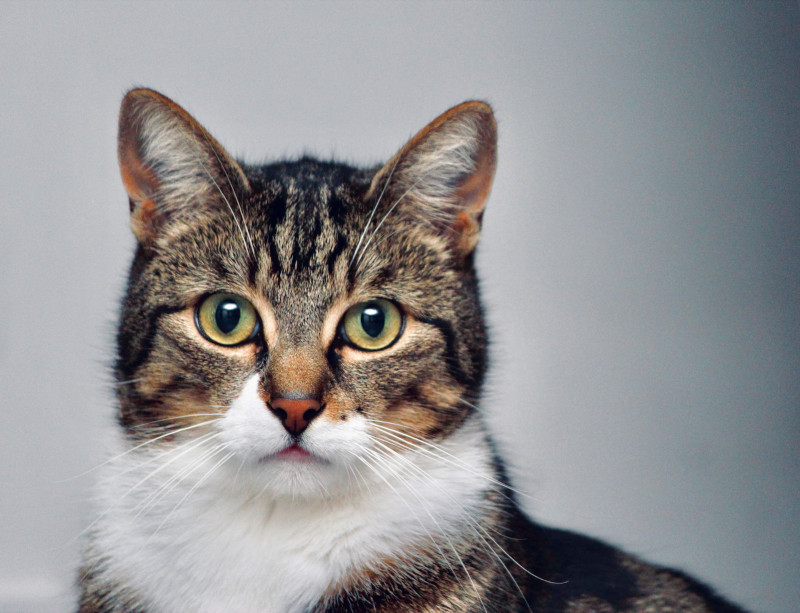
Photo by Lloyd Henneman on Unsplash