Daily Physical Activity: Why, How, and Where to Find Time?
Insufficient movement and a sedentary lifestyle threaten us not only with a rise in physical fitness but also with a significant increase in risks of developing type 2 diabetes, sleep problems, pain in the neck and back, and circulation issues. Excessive sitting provokes cancers of the colon, endometrium, and breast.
In contrast, doing physical exercise improves blood circulation, helps us cope with stress, keeps our immune system in fighting shape, improves skin tone and our self-esteem.
Life moves quickly, even when we sit, with a hundred tasks requiring attention, stress that you can’t just run away from with a yell as we could, for example, a couple of thousand years ago... Where to find time when there isn’t any, and for “sleep”?
We present recommendations from the National Health Service of England site. And they write that in order to stay healthy, adults (and they provide the age range 19-64) need:
At least 150 minutes of moderate aerobic activity per week (for example, cycling or brisk walking), and at least 2 sessions per week of strength training for all major muscle groups;
Or
At least 75 minutes of vigorous aerobic activity per week (for example, running or tennis) and at least 2 sessions per week of strength training for all major muscle groups;
They also provide an example of a possible combination: 2 x 30-minute runs plus 30 minutes of brisk walking is roughly equivalent to 150 minutes of moderate aerobic exercise. And, of course, the same strength exercises twice a week.
Additionally, it is recommended to alternate periods of long sitting with light physical activity.
In the conclusions of one of the meta-analyses on this topic, daily 60-75 minutes of moderate physical activity are suggested as a kind of mini-indulgence for a sedentary lifestyle — reducing the risks of premature death related to long sitting.
And as usual, we’ll share small life hacks that can help you move more and finally find that precious time for moderate activity and strength exercises.
- Choose walking over using transport whenever there is an opportunity. From now on we remember that it is not a waste of time but an investment in our health;
- While talking on the phone — walk or do simple exercises;
- Stand up from your workspace and speak with colleagues in person instead of emailing — whenever possible;
- Planning a meeting? Let it be a walk instead of sitting in a cafe;
- If you’re unsure which hobby to devote time to, choose something that makes you move more and breathe more;
- Embrace modern gifts of progress — there is a wide variety of mobile apps that remind you to take a break and move, tell you which exercise and how quickly it trains, and even introduce you to new friends;
- Before television, conveniently perform simple Pilates, yoga, and stretching exercises, and while brushing your teeth you can nicely train the calf muscles;
- If you’re walking with a child, join in a playful activity or simply squat a few times, or push off from the nearest bench;
- In the supermarket queue you can curl your biceps with the shopping basket;
- Park at the edge of the parking lot. This is not only a sign of good manners but also a chance to walk that extra hundred steps;
- Stand by the stove? Wave your leg. Then the other. Dry your hair with a hairdryer — do the same;
- Coming back from work past a sports ground? Stop for 5 minutes and do a few simple exercises that you’re good at. Or will be with a few tries. Each time you’ll notice mood improvements;
- Waiting for a call or for the kettle to boil? Sit down, do push-ups, or work your abs.
And remember that big victories come from small steps, and for health — not only treadmills in gyms but also our, as they say now, lifestyle. Now, ten squats!
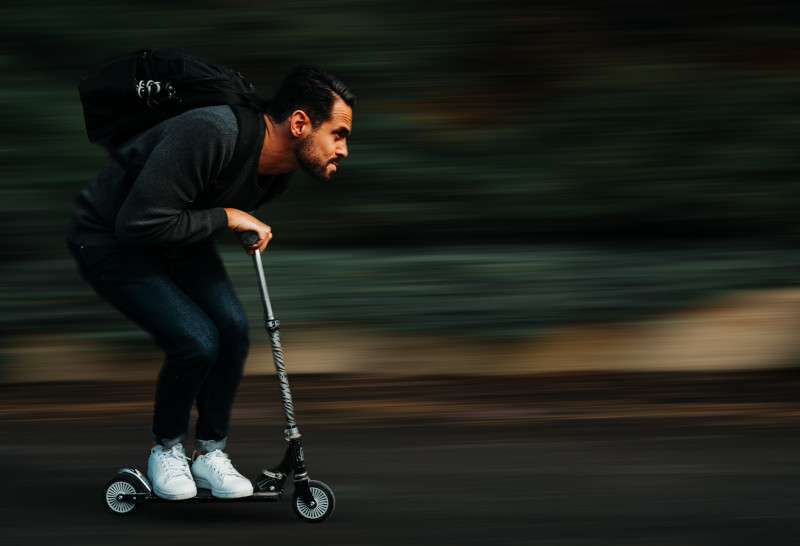
Photo by Nicolas I. on Unsplash