A Bug on the Phone and When a Doctor Is Dangerous for a Patient
What exactly lives there that’s so scary?
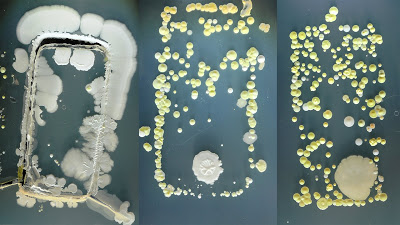
Everything you can imagine! On the surface of the phone you have traces of your (and sometimes others’) fingers, moisture, oil and sweat from your temples, ears, and hair, remnants of food and dirt, tiny particles from everywhere you’ve been today and not only today. All of this by itself is a source of microbial contamination and serves as a rich environment for bacteria to multiply and survive well. Add that phones themselves heat up a bit, and we store them in warm conditions, so microorganisms can stay viable there for a long time.
We won’t pretend to give numbers (you won’t remember them anyway, and in this case it’s not that important) — just trust that there are many microorganisms there. Interestingly, according to some data, phones belonging to men tend to have higher microbial contamination than women’s devices (oops! :))(1). Also, as expected, buttoned phones contain more microorganisms than touch-screen ones. But the sadness is not in the quantity of microorganisms, but in the fact that among them are often pathogens. This includes antibiotic-resistant Staphylococcus and Streptococcus (notable for their dark deeds in medical facilities — for postoperative patients and maternity wards this is often a death sentence), pathogenic strains of Escherichia coli (this is not only a sign of fecal contamination but also a high risk of acute intestinal poisoning), Pseudomonas and Proteus (tused together with Staphylococcus and E. coli they can cause both intestinal and skin infections), Klebsiella (a fierce little creature that can settle in the nose, cause an unpleasant breath odor, and subsequently — loss of smell), and various viruses, for example influenza, etc. (2, 3, 4, 5, 6)
And what do doctors have to do with this?
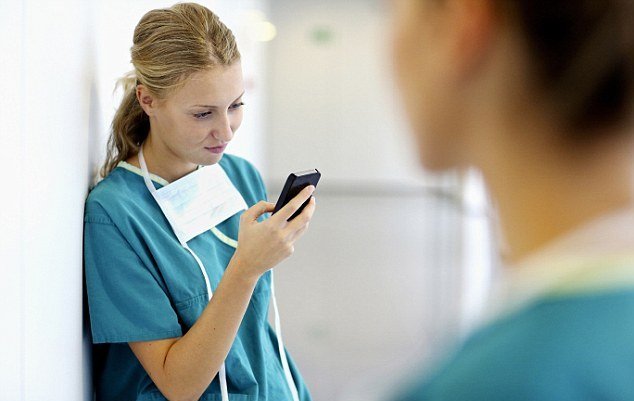
Mobile phones of doctors in some cases can be sources of deadly infections. In the sources mentioned above, as well as in tens of thousands of other studies on this topic, it is stated that doctors’ mobile phones act as vectors for spreading nosocomial infections. This is especially relevant for surgical, infectious disease departments, and maternity wards, where hospital-acquired infections can often be a matter of life and death. And think back to your last visit to the dentist! Some of you have surely witnessed a doctor answering a phone call while wearing the glove that he just used to poke around in your tooth. Of course, a surgeon during an operation, as well as any doctor who adheres to sterilization protocols, would not allow themselves to do that. But at other times, healthcare workers, like any living people, answer calls and messages — moving from room to room, touching door handles and other surfaces, being at the epicenter of a potential spread and outbreak of nosocomial infections.
In many clinics around the world, recommendations and rules for disinfecting mobile phones in medical facilities have already come into effect. And they concern not only medical staff but also visitors (7, 8, 9, 10).
And we can only hope for the knowledge and conscience of our doctors for now.
What to do about this?
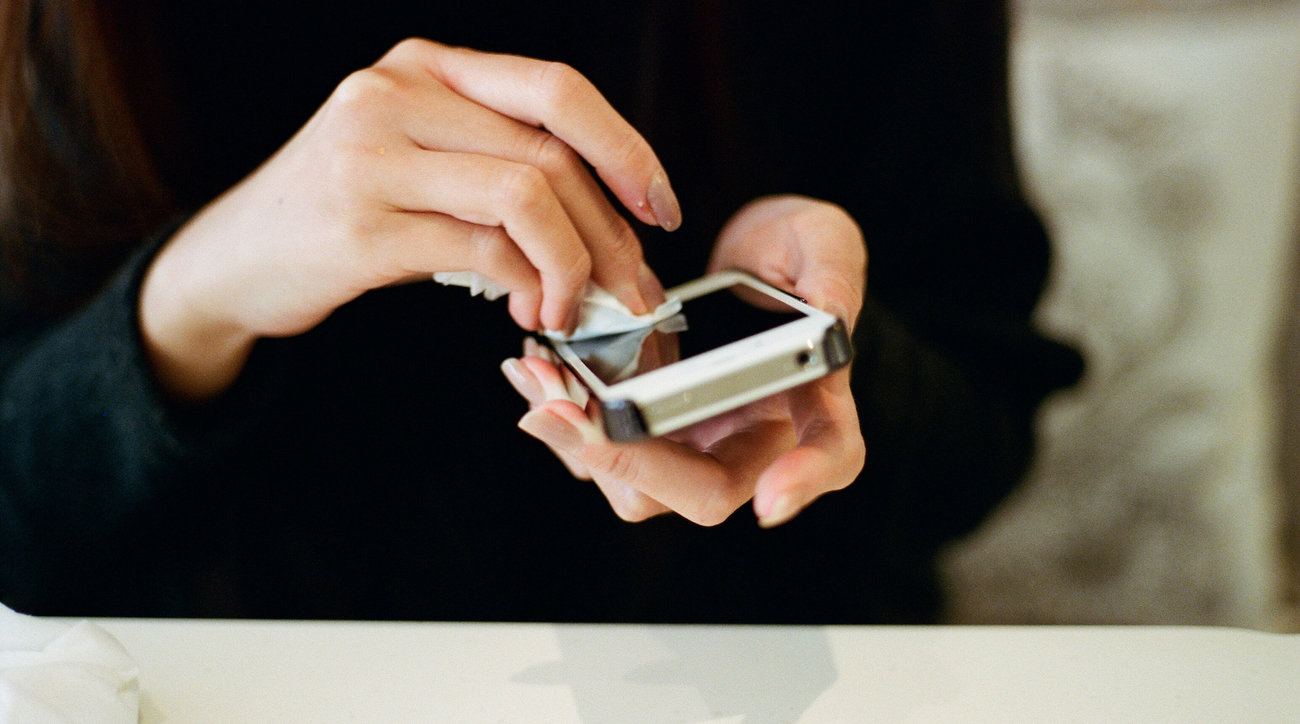
The answer is to pay attention to the hygiene of your smartphone. This involves daily cleaning when you get home. It’s like washing hands and brushing teeth — because if you don’t do that, washing hands, in the end, doesn’t make much sense. The question — how exactly?
Today there are ready-made solutions — from disinfectant wipes for devices to special ultraviolet cases that can also be used for wallets and watches. For example, in these studies 11, they compared the effectiveness of different disinfectants for mobile devices. Overall, the most effective are ultraviolet boxes, followed by alcohol-based disinfectants, quaternary ammonium compounds, chlorine-containing agents, and finally ordinary wipes that simply clean the device, although they do not have disinfecting activity. A significant advantage of UV boxes is their gentle effect on the phone surface due to lack of liquid contact. The drawback is the high cost — from $40 to $100. So a more accessible solution may be an alcohol-based disinfectant, spray, or wipes, for example based on isopropyl alcohol. You can wipe your phone at the same time as you wash your hands when you get home. This will also give your mobile device a cleaner look. In addition, it relatively lightly damages the materials from which the case is made. In the autumn-winter period, this procedure will further reduce the risk of catching a cold. To read about other measures that are worth taking for this purpose, you can read our other post on this topic.
And if you fundamentally do not use disinfectants (though in this case their use can be entirely justified), cleaning wipes are definitely better than nothing!