Soreness: Pain and Happiness
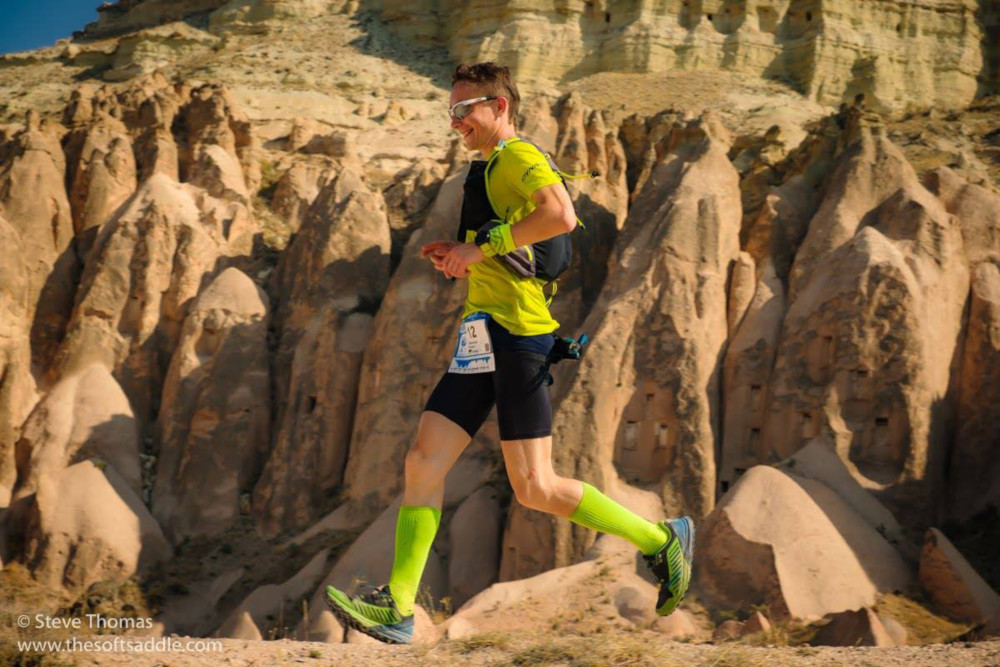
Recently, Oleksandr completed a 120-kilometer marathon, so he knows about soreness almost inside out! His vast experience across various sports — track and field, snowboarding, karate — and professional scientific knowledge in molecular biology currently give us priceless science-based knowledge on how to overcome and avoid soreness.
First, it should be said that the word "soreness" is somewhat slang; in serious circles this is called the delayed onset muscle soreness (DOMS).
Soreness appears when we abruptly decide that it’s time to start exercising and train until we drop. It also inevitably appears during exercises where there is simultaneous lengthening and shortening of microfibers of a muscle, and when engaging previously underutilized muscle groups.
Interestingly that the intensity of pain increases during the first 12-24 hours after stopping physical activity, peaking in the 24-72 hour interval.
Why does soreness occur?
For a long time it was believed that soreness appears due to the accumulation of lactate in the muscles (lactate — lactic acid, which is a metabolite of glucose and is formed during its anaerobic breakdown — when we train intensely and oxygen becomes limited). However, in reality, 90% of lactate is neutralized by the body’s buffering systems within 40 minutes after finishing exercise. Currently, the proven cause of soreness is the appearance of micro-tears in the structure of muscle fibers.
As a result, inflammations occur00099-8/fulltext), immune cells migrate to the inflamed area and release cytokines. They interact with nerve receptors and cause the sensation of pain.
Is it only pain or is there harm as well?
There is harm — but temporary. If you do not overdo obtaining soreness, nothing terrible will happen. It is a physiological process that we and our bodies must go through to increase or improve our physical conditioning. Harm can occur if you push the load to injuries rather than soreness or overexert yourself when soreness is present, which also significantly increases the risk of injury.
Does the presence of DOMS indicate the effectiveness of the training?
No, you should not rely on that. Soreness is a sign that we are not sufficiently trained, or we had a break in training, overloaded a certain muscle group, or loaded new muscle groups that were not used before.
How to get rid of it?
A natural reaction to muscle pain is the desire to avoid any physical exercise and movement. However, in most cases, performing exercises with lighter loads or involving another muscle group, as well as approaches that improve circulation and lymphatic drainage, will be more effective than passive rest. After all, they help reduce inflammation and speed up the removal of metabolic byproducts from damaged tissues.
Therefore it is worth continuing training, but significantly reducing the load and working with other muscle groups.
However, in severe cases it is better to take a break from training and allow yourself to recover. Stretching exercises during the 24-72 hour period after soreness appears should be performed very carefully.
Effective and pleasant remedy for soreness is massage. In the 24-72 hours after training, it significantly reduces unpleasant feelings in the muscles. For runners, you can read more here here. Moreover, even if for some reason you cannot visit a masseur, using a massage roller can also be quite effective.
Another effective remedy is immersion in cold water — taking a bath or swimming in a pool. Studies show that cold water at 11-15°C for 11-15 minutes provides a better effect than passive recovery.
Use of physical exercises, massage, and stretching should be done carefully08889-4/fulltext) considering the body’s sensations. It is not recommended to take steroid anti-inflammatory drugs (like ibuprofen, etc.), they practically do not have an effect.
If painful sensations do not subside within 5-7 days, this may indicate an injury. In that case, you should consult a doctor.
Are there any hacks to train so that soreness does not arise?
You should train regularly, not increase the duration and intensity of exercises by more than 10%, and also try to constantly include in your training program a small number of new, <
Effective to perform stretching exercises before and after workouts.
An important factor is also a balanced diet, in particular, the presence of enough protein. For example, it has been shown that branched-chain amino acids (BCAAs) reduce the likelihood of micro-injuries in muscles and the development of inflammatory responses.
And what measures do you take after an ultramarathon or hard runs or workouts?
- Cold water: immerse feet in cold mountain river water in the Carpathians or in a pool for 10-15 minutes, 2-3 rounds, or a very cold shower for the feet;
- Lots of fluids — to speed up the removal of metabolic byproducts from tissues;
- Sleep — the main recovery tool for the body, though after an ultramarathon it is often hard to fall asleep the next night;
- Nutrition — it is important to eat enough carbohydrates and proteins after an ultramarathon to cover the body's energy expenditures and help faster recovery of damaged structures;
- Active rest the next day — a simple walk, cycling — will improve blood flow to the legs without placing too much impact load;
- Massage, massage roller, electromyostimulation — additional tools that, if available, I try to use.
In general, regular physical activity and a well-thought-out training plan are 90% of the guarantee that after a workout you will not experience delayed-onset muscle soreness. If soreness appears after breaks in training, competitions, or performing new exercises, you should not fear it. It is a normal physiological reaction of the body that allows it to rapidly adapt to physical loads and move on to new achievements.