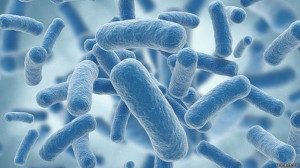
Microbial Saga: Secrets of a Superpower
Our story as a species stretches back to hundreds of thousands of years. And the history of bacteria spans billions of years. In that time, microbes have seen it all — an enormous range of temperatures and pressures, all sorts of concentrations of countless chemical substances, the emergence of life on land, the formation of continents, the dinosaurs, pterodactyls, giant ferns, and our ancestors hunting mammoths. So, honestly, penicillin or even synthetic antibiotics seem unlikely to have surprised them much.
Apart from the fact that we and bacteria have histories of different lengths, we also move at different speeds from an evolutionary perspective. What does this mean? The time interval between our generations is measured in tens of years, while for bacteria it is tens of minutes. Conditionally, by the time our children go to school, bacteria may experience hundreds of thousands of generations! Our species doesn’t exist that long. Therefore, bacterial evolution moves at a speed that is almost unimaginable to us!
Bacterial and archaeal cells (the difference between them is shown here here) compared to the cells of our bodies have a very simple structure. On the one hand, not so simple that we can confidently claim we already know everything about them, and on the other — this is precisely the case where simplicity is a sign of genius, because it allows for feats that would be impossible in more complex constructions.
For example, bacteria are characterized by horizontal gene transfer. We and other living organisms pass our genes vertically, from generation to generation, while bacteria can simply pick up someone’s DNA from the environment, which, for instance, encodes genes for antibiotic resistance, and use it for their own benefit, while it’s not so great for us. And this does not require bacteria to be of the same species! It’s like if we could jump like kangaroos just by eating their fur! Magic, right?
And microbes also have a voracious appetite and diverse tastes — they readily consume carbon dioxide, hydrogen sulfide, ammonium sulfate, nitrates, iron, phenols, and even some antibiotics that would seemingly kill them! This is because they have a wide variety of metabolic types, which is hard for us to even imagine. We’ll try to explain this briefly and as simply as possible:
For all living organisms to exist, they must obtain energy, carbon, and electrons. We obtain all of that from ready-made organic substances — buckwheat porridge, a steak, or a salad made from sprouted grains. Therefore, we are chemoorganoheterotrophs. Let’s break down: the first part of “chemo-” means a source of energy, thus all those who are not capable of photosynthesis obtain energy from organic matter, are chemoorganotrophs, while, for example, plants, which have enough sunshine — phototrophs; the second part of this scary word denotes the source of electrons and can be "organo-" — when the electron source is organic substances like us, or "litho-" — inorganic substances. The third part of the construction — "auto-" or "hetero-" — tells about the carbon source — organic or inorganic substances.
For example, your cactus, as a representative of the plant world — is a photolithoautotroph, because it obtains energy from sunlight, electrons from water, and carbon from carbon dioxide.
And only among bacteria, aside from the two previously mentioned metabolic types, there exists a wide variety of chemoLithoautotrophs, chemoLithoheterotrophs, photoorganoheterotrophs, photoorganoautotrophs, and photolithoheterotrophs. It is precisely thanks to such broad possibilities that bacteria occupy this key unique role in geochemical transformations on our planet.
In addition, some microbes can change their metabolic type depending on environmental conditions: if there is light — we photosynthesize, if there is organic matter — we eat organics. And you call yourself tough? ;)