Microbial Saga. Who, Where, and Why?
And who are these microbes anyway?
First — about the boring, but we hope not too boring — terminology. When we say microbes, we mean microorganisms. By the way, the word "microbes" appeared in the vocabulary of the French surgeon Charles Sedillot. In fact, we cannot say for certain that he coined it himself, but Charles befriended the philologist Émile Littré, who at that time was the dictionary editor and added this new word.
Microbes, or rather microorganisms, we call all living organisms that we cannot examine without optical devices. And these organisms really vary a lot — bacteria, archaea, protists, microscopic fungi or algae.
A brief note on the differences between them:
Bacteria — cells that do not have a nucleus and several other components that our own cells have. Examples of bacteria — lactobacilli, Escherichia coli, Staphylococcus. Archaea — very similar to bacteria (under a microscope you are unlikely to tell them apart), but are very different from them genetically and chemically. A particularly interesting trait of archaea is that they mainly tend to inhabit extreme environments, for example, in the boiling water of geysers or in the incredibly salty waters of the Dead Sea.
Protozoa have a nucleus and, in general, a cell structure similar to ours. They are simply very autonomous and small. This includes the well-known amoebas, paramecia, and green Euglena. Microscopic fungi also have a nucleus, but, for example, they can also form hyphae. Examples of microscopic fungi are yeasts and mold.
And now a bit about scale
If we take all living things on our planet and calculate their mass, then all those microbes will make up about 15% of all living matter. And we, humans, 0.01%. And if we look at a map of the world and see million- and billion-strong megacities, where there are incredibly many of us and we feel so significant, where are those countless microbes, outnumbering us by hundreds of times?
Microbial biomass is concentrated mainly in the ocean depths and in soils. Besides, essentially, every space and every surface on Earth, to a greater or lesser extent, contains microorganisms. Each of us carries inside and on us about two kilograms of bacteria, concentrated mainly in the intestines. And if our gut bacteria, so to speak, are literally closer to the body, what is our concern with that distant, unknown abyssal microbiota?
Why are all microbes important?
We do not live in a closed space. We breathe air, drink water, eat food, and go to the bathroom. And even these basic needs are connected in some way to the activity of bacteria.
Cyanobacteria, which inhabit the world’s oceans, once created a primitive oxygen-containing atmosphere, which made it possible for living organisms to push their noses onto land. Thanks to microorganisms, soil forms. On it grow plants that continue to provide oxygen, food, and shelter. Microorganisms are the key to transformations in nature, convert organic forms of matter to inorganic and vice versa — for example, fixate molecular nitrogen from the atmosphere and saturate the soil with it, decompose all dead residues, including ours.
Our microbiota trains our immune system, protects against foreign pathogenic bacteria, participates in our metabolism, cholesterol exchange, sex hormones, and can determine our proneness to overweight and even depression.
Oil, gas, and technologies for extracting many metals are possible thanks to the activity of microorganisms. The same goes for fermented dairy products, hard cheeses, pickled vegetables, soft bread, and, of course, all alcoholic beverages.
Therefore, that tiny, relatively speaking, pinch of pathogenic microorganisms is not worth thinking about declaring war on microbes. Moreover, we will never win. More on why in the next article.
For now, we hope you already understand that there is no point in it :)
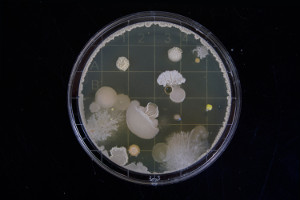
Photo by Michael Schiffer on Unsplash