Mythology of Butter
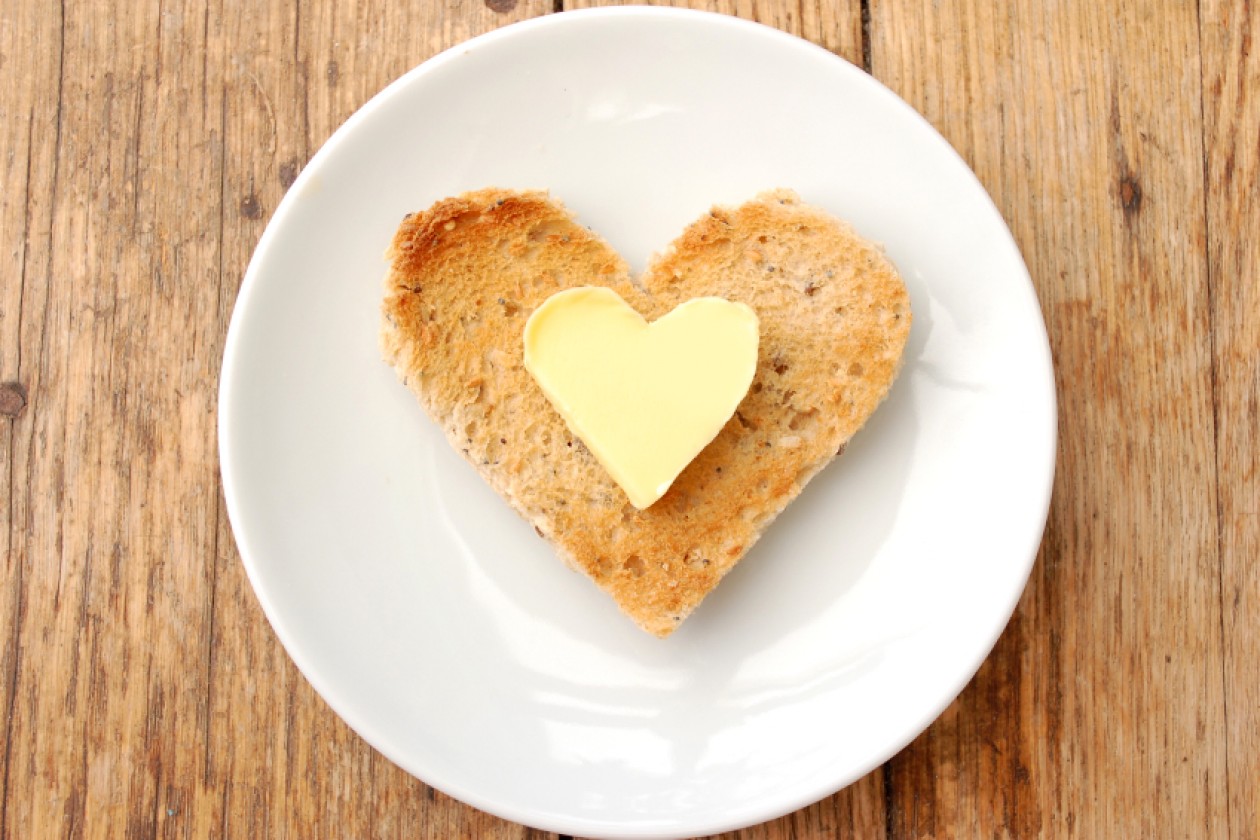
Butter — what is that?
Butter is a dairy product obtained by churning cream. According to technological features, different kinds of butter are distinguished, such as sweet cream butter (from pasteurized cream) or sour cream butter (from pasteurized cream soured with pure cultures of lactic acid bacteria), creamed (with fat content — 99.8%) and salted (with the addition of table salt).
In terms of fat content in the product and the standard DSTU 4399:2005, butter can be extra (80-85%), peasant (72.5-79.9%), and butter-containing (61.5-72.4%), as well as the already mentioned — creamed butter (milk fat — more than 99.8%).
Immediately we answer the popular "mythological" question — "what makes up the rest of the butter that is not fat?". And that wonderful remainder of butter is the so-called butter plasma — it consists of milk proteins, water, lactose (milk sugar), mineral salts, lactic acid, and water-soluble vitamins. So the more plasma, the lower the fat content of butter, and vice versa, and this is absolutely normal.***
Falsification and mimicry
It is important to understand that there is butter, and there are products that look a lot like butter, but according to definitions and standards, they are not butter. Examples of such products are most often spreads and margarine. Their packaging may feature cows or goats, but writing "butter" and referring to the above sacred DSTU is not allowed. Therefore, when buying butter, you should carefully read the labels on the packaging.
Margarine has nothing to do with dairy products. It consists of hydrogenated vegetable oils and well-chosen colorants with flavorings. The main danger of margarine is its high content of trans fats — up to 50%. Let us recall that during the hydrogenation process (the transformation of liquid vegetable oils into solid margarine) some fatty acids change their spatial configuration from the cis form to the trans form. Our body's enzymes cannot process such fatty acids. A small clarification — trans fats are not some poison that you immediately die from after eating. Animal fats, including butter and beef fat, also contain a small amount of trans fats — up to 8%.
Modern, but not always cheap technologies allow producing margarine without trans fats. If the label states that the product contains polyunsaturated fats, it means that there are no trans fats.
Spread is an emulsion of dairy and vegetable fat, where the mass fraction of dairy fat is not less than one quarter of the total fat in the product (DSTU 4445:2005). The good news is that the content of such dreaded trans fats in spreads is regulated by Ukrainian standards and should not exceed 8%, just like in ordinary butter. Therefore, for these reasons spreads are completely acceptable for consumption.
A question that concerns everyone — can you distinguish butter from "non-butter" at home?
Often you can find a description of an experiment where a piece of the tested product is dropped into a glass of hot water and they assess how it melts and the cloudiness of the water. This method can only distinguish between margarine and butter or spread. Butter contains a dairy residue and it itself will form a whitish emulsion with the water. Water with margarine will be clear. So if you suspect you are dealing with a margarine-falsified butter, you can check it this way. However, this method will not help distinguish butter from spread, because both contain some milk, so some cloudiness will still be present. By the way, creamed butter also, almost like margarine, will give very weak cloudiness, since it has virtually no milk residue.
Soft or brittle?
The claim that brittleness or softness determines the authenticity of butter is, in fact, a myth. This characteristic depends on the season — in spring-summer, low-melting fats prevail, and in winter — high-melting ones. Incidentally, the shade of butter also varies with seasonality — winter butter is lighter, in summer it is yellower. Also, increased brittleness of butter can be related to some non-compliance with temperature conditions during the churning process in production. Under such conditions, the plasma in the fat phase can distribute unevenly, giving the butter more brittleness.
Healthy or harmful?
Regarding butter being a valuable source of nutrients, fats, and even vitamin A, you can read in numerous sources. It really is a healthy food if you remember the banal moderation. The thing is that our modern diet often contains excessive amounts of animal fats. This is a risk factor for cardiovascular diseases, especially for older patients. Therefore, in medical guidelines, it is advised to rationally limit animal fats, including milk fat. Younger people with good cholesterol levels are less affected.
And finally — when buying butter, always pay attention to the shelf life and storage conditions — not above 6°C, and better — below 0°C.
Bon appétit and be healthy!
We are very grateful for the fruitful discussion of this topic with the dairy technologist, Natalia Vasilyeva, chemist, Gleb Repich, and cardiologist, Oksana Livinskaya.