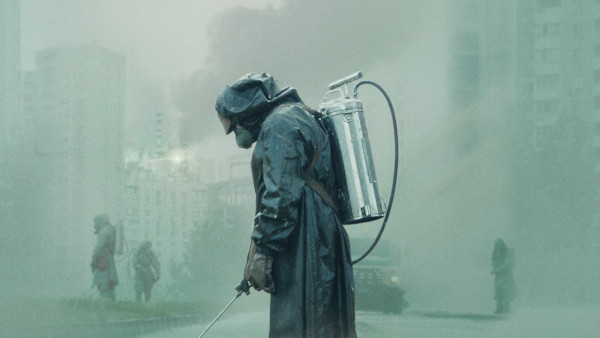
Radioactivity: Not Just About Chernobyl
What is radioactive irradiation and what could be its sources?
This is radiation, i.e., the propagation of energy in the form of waves and particles. Sources of ionizing radiation are the process of decay of unstable forms (isotopes) of chemical elements, which releases energy in the form of high-energy waves or particles. Nuclear substances like cesium-137 and strontium-90 are the main sources of ionizing radiation that pollute the territory of Ukraine (as well as Belarus, Russia, and other Northern Hemisphere countries).
And speaking of X-ray radiation used in fluorography, it is formed by the interaction of fast electrons with the metal of the X-ray tube.
Where can radiation levels be high? How is it measured?
Radiation is an inseparable part of our lives. Even for our bodies it is natural to have certain doses of radiogenic elements. For example, the concentration of radioactive potassium in products such as potatoes or bananas is quite high, so much that scientists have even introduced the term "banana equivalent" to explain the dose of radiation a person receives from eating one banana. This helps to more easily grasp the dose an average person receives over a lifetime — we would obtain about 36 micro-Sieverts if we eat one banana a day for a year.
We can also receive an elevated background even after showering, provided water from wells is used — this is formed by the radioactive gas radon dissolved in such water.
Is it true that architectural granite objects can also be radioactive?
Yes, granite can be radioactive. Since granite is a volcanic rock, a kind of "soup" of different rocks, the crystalization process was longer than in basalt but shorter than for fully stratified rock types. It can contain such radioactive substances as thorium, uranium, etc. But if the stone is really radioactive, it will not pass the output inspection from the workshop.
Is it true that flying in airplanes also exposes us to increased radiation from the Sun?
Yes, because the layer of atmospheric air that protects us from fast particles and electromagnetic waves coming from the Sun is much thinner at altitude. Mountaineers climbing mountain peaks, for example, also receive elevated doses. For instance, Everest climbers receive about 1 milli-Sievert, which is like eating 1000 bananas. This dose is five times higher than the limit allowed for nuclear power plant workers (20 micro-Sieverts per year).
What radiation doses are safe for people?
A dose of 1 milli-Sievert per year is considered permissible for an average person. For workers who are authorized to work with radiation sources, there are limits of no more than 20 milli-Sieverts per year, and in the case of an emergency — up to 50 milli-Sieverts at once.
What mechanism describes radiation's impact on our body?
There is a threshold-free interaction concept of ionizing radiation with living organisms: any dose has some effect. Low doses stimulate cellular repair (the so-called hormetic effect), high doses increase the number of mutations in DNA. High and acute doses (i.e., received in a short period) destroy the cell membrane and organelles. In general, ionizing radiation can be imagined as balls flying into our cells — gamma is like a paintball round — small and high speed. Such a ball is much smaller than organelles, so its interaction with cellular structures has a probabilistic effect. Beta is like a tennis ball, larger and with less energy, but its chance to hit DNA is higher, and so is the chance of being shielded by clothing, for example. Alpha is the largest particle and the most dangerous type of radiation. But due to the size of this particle (you could call it a huge inflated fitness ball), its effects are quite easily mitigated — even the outermost layer of our epithelium can handle it.
What principles guide protection from harmful radiation exposure?
There are three principles of working with radioactive substances — protection by time, shielding, and distance.
Protection by time — minimize contact with the source. In a TV series we see this principle at work when the military have only 13 seconds to remove graphite debris from the shelter roof.
Protection by shielding — building barriers in the path of radiation. Thus alpha can be stopped by simple clothing — which is why wearing military uniforms made of coarse fabric, as well as improvised steel diapers that soldiers used in the series, made sense. Protection from beta — plexiglass, glass, gas masks. Protection from gamma — a very tricky issue, because to cut the dose in half you need a layer of iron as thick as 1.8 cm (and imagine its weight!). That is why we see cars shielded by a thick layer of iron in the series.
Do radiation effects extend to future generations?
Interaction with ionizing radiation induces mutations. But just like free radicals, certain toxins, etc. If mutations are not repaired by cellular mechanisms, if they are compatible with life and occur in germ cells, then their manifestation in subsequent generations is quite probable. This is somewhat more pronounced for female germ cells, since male cells renew every few months. However, in any case, the pool of gametes is formed for life. The tragedy of our Chernobyl liquidators is that most of them were not yet parents and received high doses of irradiation. In Fukushima, only men were allowed to participate in cleanup work and only those who already had at least two children and were not planning to have more.
Is it possible to create a genetically modified human organism that is radiation-resistant?
If we uncover the secret of tiny tardigrades — those with the most powerful cellular repair systems on the planet — then yes! But then we would not only defeat the consequences of radiation exposure — we would solve the aging problem of the human body (note: tardigrades are tiny creatures — somewhere between worms and millepedes. They can withstand radiation doses 1000 times higher than we can endure, and can even survive in outer space open to the cosmos!).
Where else is the phenomenon of radioactivity used?
The phenomenon of radioactive decay has given us many things essential to modern life. X-ray, as an important diagnostic procedure; sterilization of medical devices (high doses of ionizing radiation kill all living things, including bacteria inside packaging); radiotherapy; and, of course, nuclear energy! Did you know that more than 50% of electricity in Ukraine is produced by nuclear power plants?
What role can our diet play in radioprotection?
Again we return to the concept of the destructive effects of radiation. If a person is healthy, keeps themselves in optimal physical condition, and takes care of their health — the consequences of irradiation will be much smaller than for a weaker person. In fact, the error-correcting mechanisms (repair) in us are universal — it does not matter what caused the mistakes: ionizing radiation, tobacco smoking, or other carcinogenic substances. Regarding iodine, or more precisely potassium iodide in tablets, it has a substitutive effect. It is worth noting that each dose-forming radionuclide has element-analogs used by our body. For example, the analog of cesium is potassium, and strontium analog is calcium. But if the body has enough stable analog, it will simply ignore the radioactive substitute. Therefore, if a person consumes enough milk to meet the body's calcium needs, there will be no problem. By the way, that is why in hazardous work conditions — “for the sake of harm” — they give milk. The same goes for potassium — we can eat enough red meat or potatoes to meet our needs for this element. But with iodine we have problems. Northern Ukraine is an iodine-deficient region. That is why as soon as the body encounters iodine anywhere — it absorbs it and sends it to the thyroid gland. And if this iodine is radioactive — worse for the person. But if there is enough normal, stable iodine — the body will not use dangerous analogs. That is why in Japan, for example, where the diet is rich in seafood (which is the source of stable iodine), iodine therapy has not become so necessary.
Is it dangerous to visit the Chernobyl area now?
Today, the radiation level from the Chernobyl plant poses virtually no threat to Ukrainians, because harmful radiation is confined by the Shelter over the 4th power unit, and the radionuclides on the surface soil would not have time to form a dangerous dose during a 1–2 day excursion. More hazardous during a tour are unstable metal structures, accident-prone buildings, and wild animals.
When could the Chernobyl zone become suitable for living?
The main part of the Chernobyl zone is already suitable for living in terms of radiation levels. Most lands are allocated to the Chernobyl Reserve, which will expand their use. But the lack of proper infrastructure and jobs casts doubt on the necessity of returning these territories to public use. Unfortunately, Ukraine currently has quite a few abandoned and neglected areas that need people back more than the Chernobyl Zone.
What are the rules for visiting the Chernobyl zone? What should visitors prepare for?
Official Rules for staying in the Exclusion Zone allow staying there only in closed clothing: pants, a long-sleeved shirt or jacket, closed footwear (preferably with thick soles).
Prohibited: shorts, cropped trousers, skirts, open footwear, short sleeves. The staying rules in the Zone also prohibit eating, drinking, smoking outdoors, touching structures, trees, plants, collecting and consuming mushrooms, berries, fruits, and nuts in forests and gardens of abandoned settlements, sitting on the ground, placing photography and video equipment, bags, backpacks, and other personal items on the ground.
Did you like the series "Chernobyl" itself and would you recommend it to our readers?
Liked it! Despite some criticisms and inconsistencies, it should be watched at least because it has brought the topic of Chernobyl back into focus, and its lessons should not be forgotten.