Pickled Cabbage: Pro Tips from the Pros
So, what should the perfect pickled cabbage be like? And what should we, as consumers, look for when buying this product?
First of all, you need to differentiate pickled cabbage from other similar cabbage-based products. These can be various pickled items in which fermentation does not occur, and which do not have all those beneficial properties, and sometimes can even be harmful.
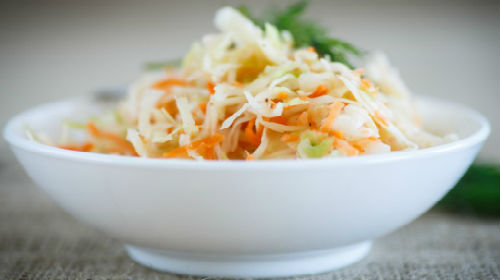
Pickled cabbage should be, above all, tasty. Also — crunchy, not dry, moderately salted, with a characteristic aroma, without an unpleasant smell and even a faint scent of vinegar. You should pay attention to the color of the cabbage — it should not be too white — that could indicate the addition of vinegar. The cabbage should not be slimy — that may indicate spoilage.
And if you want to pickle cabbage yourself — when is the right time to do it?
You can pickle cabbage anytime there is cabbage! Traditionally, it was pickled in autumn and stored in a large barrel — simply because that was convenient. But at other times it can be pickled as well — the season will not significantly affect its taste.
Is it really possible in an urban setting, without a cellar and a barrel, to successfully pickle cabbage? Please tell us the best way to do it, what to pay attention to, and what subtleties exist? How to choose cabbage for pickling?
This is absolutely feasible — if there is a will! :) And, of course — cabbage! The best variety for this is white cabbage, since it contains the most sugars that our lacto-susceptible sweet-toothed bacteria love!
First, carefully inspect the cabbage and decisively reject even the slightest damage — so there is no mold or other infections. Also prepare clean dishes — a fermentation vessel, a shredder or knife, bowls — everything must be well washed and dried before starting. And, of course — wash your hands well, or even prepare new clean gloves. These nuances are very important because the product does not undergo heat treatment and the introduction of foreign microbiota can spoil the product.
Shred the cabbage finely into thin strips and add salt (2-2.5%, or 20-25 g of salt per 1 kilogram of cabbage). Salt is needed not only for better flavor. It also inhibits the growth of external microorganisms but does not suppress the growth of lactic acid bacteria. If desired, we can add carrots. Then mix everything and knead with clean hands to release juice. Thus, the beneficial microorganisms will have a comfortable environment for existence and the mood for the process we want — pickling.:) Place the prepared mixture tightly into the prepared container. Do not choose too wide a container, so that the surface area in contact with air is minimized. Put something heavy on top. If it is a glass jar, a glass with water can serve. Remember that a glass jar can crack — don’t exert maximal pressure when pressing the cabbage! Remind yourself once more that the cabbage should be topped with juice. This way we prevent oxygen from entering and promote the lactic acid bacteria to do their job. Place the containers in a warm place (but not above 32°C, you can even keep them near a warm radiator) for 2-3 days and the pickled cabbage is ready. The process will also occur at lower temperatures, but it may take a little longer. Do not stir the cabbage during the pickling process, as this would introduce unwanted oxygen. But you can gently pierce it with a long knife to release carbon dioxide that can accumulate during fermentation.
How long and under what conditions can pickled cabbage be stored?
Store pickled cabbage in the cold — at temperatures below 10°C, but also do not let it freeze.
One of the many advantages of pickled cabbage is its long shelf life. The finished product stored in a refrigerator (on a balcony or in a place where the temperature is below 10°C) can keep for up to six months. Why so long? During the fermentation that occurred, lactic acid bacteria multiplied and produced lactic acid and hydrogen peroxide, which act as biological preservatives and suppress the growth of external microorganisms — Staphylococcus, E. coli, mold, and many other undesirable microbes.
How is pickled cabbage beneficial?
First, it is a raw vegetable, a great food rich in vitamins and fiber. Second, it is a source of lactic acid bacteria that promote a healthy gut. Third, these same lactic acid bacteria, consuming plant substrate, also produce B vitamins and folic acid. Fourth, bacterial enzymes, so to speak, break down large long and inaccessible molecules of plant polysaccharides into small fragments that we can absorb, and these fragments have antioxidant properties! Lactic acid bacteria can even break down nitrates and reduce their content in cabbage if there was an excess.
Can pickled cabbage be harmful under certain conditions?
Yes, if it is spoiled — it can cause digestive upset. It is also important to remember that this product contains a significant amount of salt. In addition, very rarely, but it happens, some strains of lactic acid bacteria synthesize substances like biogenic amines. In high amounts they can have a toxic effect, presenting as headaches, nausea, or muscle cramps. Therefore, it is worth paying attention to your sensations and their changes!
For these and other reasons, the development of probiotic plant-based fermentation for industrial-scale use is a relevant area. A group of researchers at the Institute of Microbiology and Virology named after Zablotny of the National Academy of Sciences of Ukraine is successfully working on this.
And, while the clock has not yet struck twelve, you can diversify the list of New Year’s mayonnaise salads with a homemade super dish! How — you already know :)