Spices and Microbes
Today, in the era of globalization and the development of transport, you do not have to be rich to buy black pepper or cinnamon. With imagination and desire, you can transform any dish into a work of art with spices. In our golden age there are refrigerators and quality control of food, so there is no need to choke down questionable meat with clove.
However, spices today remain relevant not only for gastronomic reasons.
These plants are a popular subject for research in various fields. The components contained in spices possess antioxidant, anticancer, anti-inflammatory, antiviral, antifungal, and antibacterial properties.
And considering the research crisis in discovering new antibiotics, spices may represent a quite promising field for the search for new substances that will protect us tomorrow from multi-drug-resistant infections.
And indeed, the authors assert that clove, cinnamon, black cumin, bay leaf, mustard, and rosemary have antibacterial properties and, in some cases, this could potentially be used therapeutically.
In some studies shown that extracts from spices acted against multi-drug-resistant pathogenic microbes; for example, oregano extract inhibited the growth of multi-drug-resistant Staphylococcus aureus, Pseudomonas, and Escherichia coli. And cinnamon oil in the form of liposomes suppressed the growth and biofilm formation of methicillin-resistant Staphylococcus aureus. Coriander oil suppressed multi-drug-resistant Acinetobacter.
Why might this not work at home in the kitchen?
It is worth noting that in the studies, researchers mainly used extracts rather than the spices themselves. They can be obtained using various solvents (water, ethanol, methanol, ethyl acetate, etc.), and may have different concentrations. Most of these studies are in vitro or sometimes in animals. Also, consider that spices may exhibit antimicrobial activity against some types of microbes but be completely inactive against other bacteria. For example, studies on cumin oil showed inhibition of Escherichia coli and Staphylococcus aureus but had no effect on Pseudomonas or Klebsiella.
Therefore, treating infections with spices or relying on their antibacterial properties while neglecting proper food storage rules or choosing poor-quality raw materials is not the best idea.
It is also important to know that spices themselves can be a factor in the transmission of infectious diseases and contaminants, such as heavy metals.
After all, spices often come from countries with high environmental pollution levels. In particular, there is emphasis on the risks of lead contamination of spices and herbs.
Besides substances that are environmental contaminants, sometimes spices can contain foreign objects, such as soil residues or mouse hair.
According to FDA monitoring data, in imported spices from 2007–2009, Salmonella was present in more than 6% of cases. Spices in which it occurred more often were coriander, curry powder, oregano, and basil.
Spices originating from different countries showed varying degrees of microbial contamination—spices from Mexico and India contained Salmonella more often, while those from Canada, Indonesia, and Pakistan did so less often.
According to the data from the report, about 70% of foodborne illness cases linked to the consumption of spices occurred when they were added to ready-to-eat foods. In other words, if we add spices to a dish that undergoes heat treatment, the probability of encountering infectious consequences is significantly lower than if we sprinkle questionable oregano on a salad.
Therefore, it is not worth treating a toothache by chewing clove or engaging in other forms of self-medication. Also, pay attention to the origin of spices and do not expect their fragrant aroma to "kill all the germs."
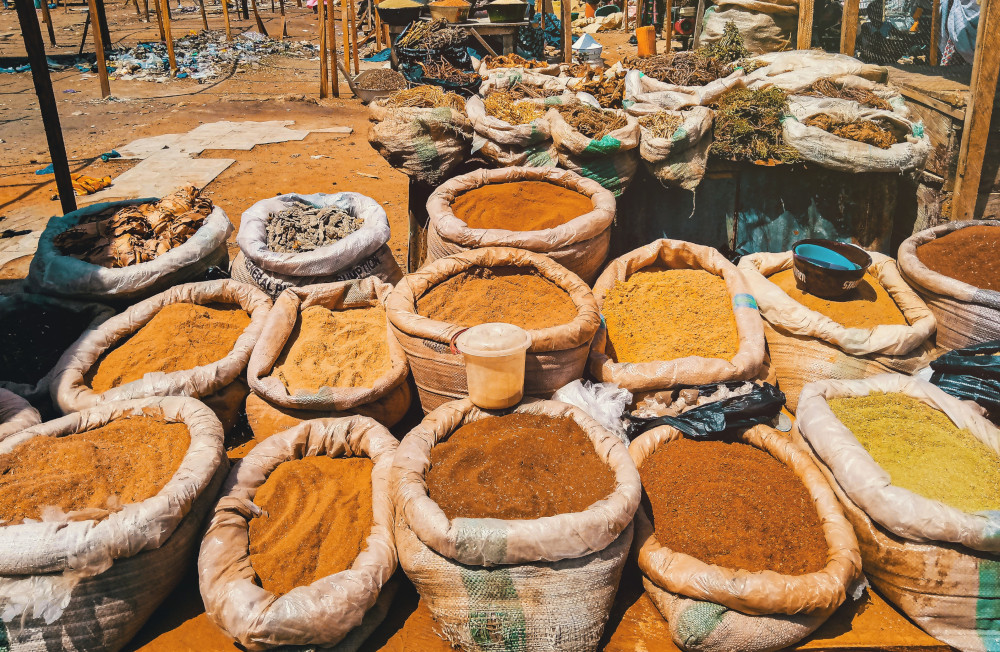
Photo by Omotayo Tajudeen on Unsplash