Magic Pill: What You Should Know About Antibiotic Use?
The situation is especially acute when you need it “here and now” and there’s no time for an antibiotic susceptibility test — for such cases, sometimes a mixture of antibiotics is used right away, because the price can be paid in human lives... It happens that surgeons perform hours-long, high-precision operations, celebrate their successful completion with the family, and then encounter postoperative complications. And quite often it is some inconspicuous Staphylococcus that took the wrong path and acquired genes of multiple antibiotic resistance. And quite often this ends in patient deaths. According to the CDC data, in the United States every year at least 2 million people acquire antibiotic-resistant infections and at least 23 thousand of them die.
And somewhere nearby, right now — one of us has fallen ill with an infectious disease and decided to recover and treat themselves with antibiotics more quickly. Formally, we have nothing to do with those 23 thousand, but all participants in irresponsible antibiotic use can be rightfully included in the list of accomplices to the murder of these people.
Why do we become accomplices?
Bacteria evolve with incredible speed — the time between generations in our species is measured in decades, while for bacteria it is tens of minutes.
The acquisition and spread of new traits happens very quickly; horizontal gene transfer also facilitates this, and microbes are not shy about sharing antibiotic-resistance genes with members of other species. And even a formally living owner of these genes is not always necessary — genes from dead bacteria can also be transmitted.
So when you’ve overused antibiotics and thereby populated the noses of some antibiotic-resistant Staphylococcus strains, there are many possible scenarios. You might go visit a relative in the hospital after surgery and personally bring them a snack, warmly shaking their hand. Or you might blow your nose and your Staphylococcus will travel into sewage, where it will meet other Staphylococcus that were treated with different antibiotics. During friendly interaction, bacteria will politely exchange resistance genes to other antibiotics, and will likely gain experience dealing with cleaning and disinfecting agents present there in diluted amounts — this is, so to speak, hormesis in its pure form! Except not for us this time. This will make the bacteria even more resistant and, so to speak, harsher.
And then — for example, the beach or soil where vegetables are grown, or someone’s cacti in pots. And sooner or later, under conditions of widespread antibiotic use — with food, flowers, on hands, hair, or mobile phones — antibiotic-resistant killers penetrate into hospital wards and beyond the doors of maternity hospitals...
It is fair to say that the process of antibiotic resistance can also develop intensively in hospital settings themselves, where the frequency of antibiotic use is much higher. However, today you can fall ill with an antibiotic-resistant infection not only while lying on a hospital bed — antibiotic-resistant strains are found in swimming pools, wastewater, and sea fish.
And what about me?
The irony is that in most cases we do not actually need those antibiotics, and more than that — they can do us harm. Why and how exactly?
First, antibiotics are not effective for so-called colds. They are mainly caused by viruses, not bacteria. All antibiotics target elements that exist in a bacterial cell — whether it’s the synthesis of the cell wall (penicillins), proteins (tetracyclines), DNA (rifampicin), and viruses, on the other hand, do not even have cells. For antibiotics, viruses are, so to speak, invisible. Digestive disturbances can also have non-bacterial causes, and in addition, an antibiotic is far from the first remedy to use for food poisoning. And if things are bad, delays in such self-treatment can be dangerous. The same applies to infections of the urogenital tract — different pathogens require different antibiotics. Second, antibiotics substantially disrupt our own microbiota. And this is not only a matter of intestinal upset, but also a deterioration of the barrier function of biofilms. Our own microbiota lives in our throats. When you have a sore throat due to a virus, and you also add an antibiotic, it becomes much harder for our bacteria to keep out foreign bacteria wanting to settle on freed territories. Thus, the likelihood of a secondary bacterial infection even increases. Third, the space vacated by killed bacteria may be occupied not only by newcomers but also by various fungi that antibiotics do not affect. Therefore, an increased risk of fungal infections is an inherent attribute of uncontrolled antibiotic consumption. (And no, do not blame the yeast in bread here.)
Fourth, we must remember that initially, antibiotics are a kind of poison that some microscopic fungi and bacteria learned to synthesize to fight competitors in their micro-world (note: there is a complex system of classification of antibiotics by chemical structure, mechanisms of action, and origin; today there are also many synthetic antibiotics). Therefore, some antibiotics can have quite a few side effects.
Fifth, self-prescribing antibiotics disrupts the subsequent diagnosis of the illness. No one will know how exactly to interpret your antibiotic susceptibility test later if you do such a thing.
If antibiotics are still needed?
This should be determined only by your doctor. Never pressure your doctor or demand an antibiotic prescription!
- In addition to self-medication with pills, also refrain from using external products that contain antibiotics — antibacterial ointments, gels, etc.;
- However, do not refuse an antibiotic prescription if your doctor recommends it;
- Be sure to finish the entire recommended course of antibiotic therapy even if you feel better at the start of treatment. Untreated infection can be a source of recurrent antibiotic-resistant infections;
- Do not miss doses and follow the recommended dosing intervals — this also helps prevent the emergence of antibiotic-resistant mutants;
- Do not share antibiotics with other people — for each individual case, a drug that is best for each patient must be prescribed and used;
- Monitor storage conditions and expiration dates of medications.
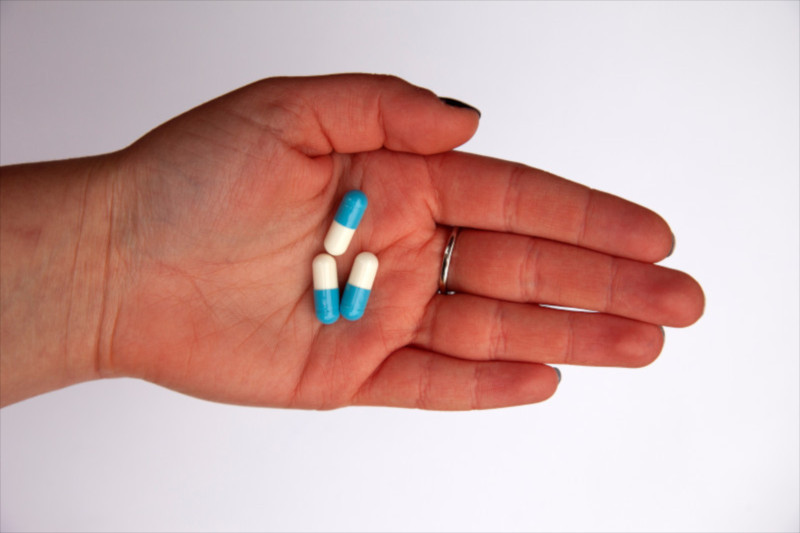
Photo by Mark Fletcher-Brown on Unsplash