Tangled Chemistry of Coffee

There is a common belief that coffee is a kind of drug. Is this really the case?
From a formal point of view, coffee indeed contains a substance that can cause dependence. Caffeine is the main alkaloid of coffee, which underlies its \<\
But with prolonged intake of high doses, caffeine can cause a mild drug-like dependence and even a withdrawal effect \<\
How does it work?
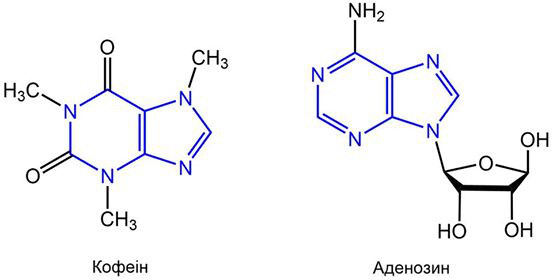
How does our body feel tired at all? It does so thanks to adenosine — a purine nucleoside that has an inhibitory effect on the central nervous system and plays an important role in regulating sleep. Adenosine concentration increases during wakefulness and decreases when we sleep. But for its inhibitory effect to manifest, adenosine must bind to specific adenosine receptors in brain cells to send a \<\
*Thus, one of the mechanisms of caffeine’s action is its structural similarity to adenosine. Caffeine can also bind to adenosine receptors, but unlike adenosine, it does not activate them. In other words, caffeine simply blocks the receptors, occupies all \<\
However, our body is not stupid and quickly realizes that something is broken, and the fatigue signaling mechanism is functioning poorly. And what does it do? Correct — it will simply increase the number of adenosine receptors in brain cells! And over time we will need more and more caffeine to block them. Thus dependence may develop and we will need more and more coffee to achieve the alertness effect.

And if, under such circumstances, coffee suddenly runs out, this can turn into a real ordeal. We suddenly have a pile of unblocked adenosine receptors, and all the adenosine that our body produces will bind to as many of the fatigue receptors as it can find. As a result — we will feel super-fatigue. And we will feel tired even if we have rested well.
And all this happens because of excessive caffeine consumption, which disrupts the balance of fatigue signaling in our body. The good news is that this process is reversible, and over time the balance will be restored, but for a while we will feel unpleasant symptoms.
Therefore it is important to remember that caffeine in no way gives us real energy; it only masks fatigue. Therefore, if you constantly rely on the energizing effect of coffee, this may lead to dependence and even to exhaustion of the body.
However coffee is not only about stimulation. First and foremost, it is about the pleasure of taste receptors. Also today drinking coffee is a real culture, its own aesthetics and occasion. It is precisely because of this combination that coffee gained such popularity since ancient times.
What kinds of coffee are there anyway? How not to get tangled in these Arabicas, Robustas, espresso, americano, latte, macchiato...?
... And there is flat white, latte macchiato, moka pot, filter coffee, French press, AeroPress, V-60 and many, many others.! Yes, coffee culture is very hipster.
Let’s start with Arabica and Robusta — these are two different species of coffee plant.
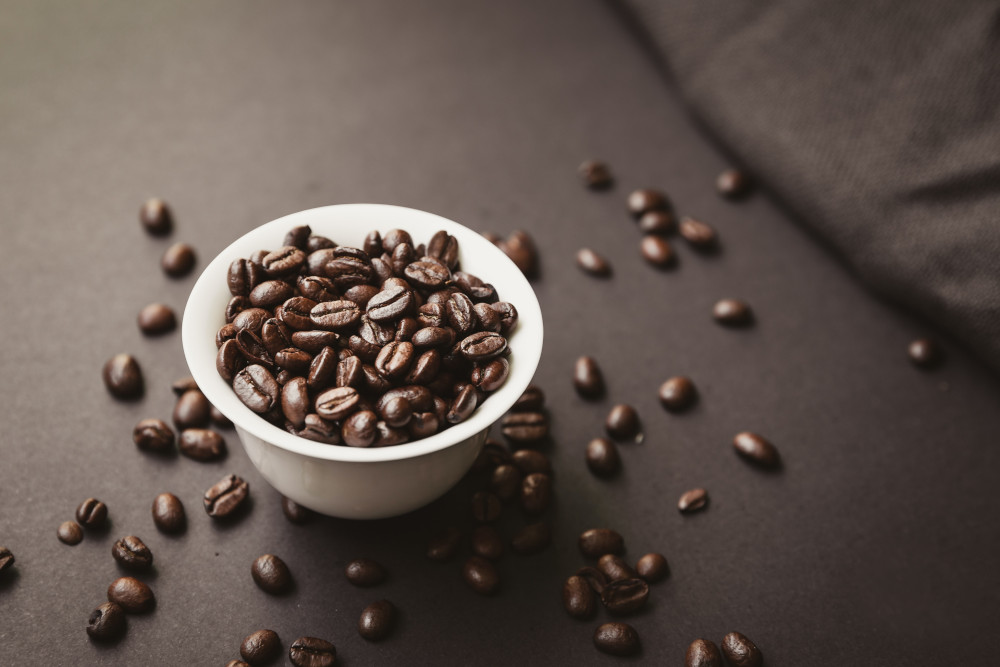
Arabica differs from Robusta both in the taste of the final product and in the growing conditions, resistance to diseases and pests, and accordingly, in price. By the way, you can easily recognize Robusta and Arabica beans even if they are sold as a blend. Arabica beans are more elongated, Robusta beans are more round.
The name \<\
Arabica, or \<\
In addition to pure "Robusta" and "Arabica," blends of the two are popular in various proportions, as not everyone aims for only a “bitter caffeine kick” or only an aromatic camellia — depending on tastes and needs, you can choose an ideal blend for yourself. Moreover, very often combinations of these varieties are used in espresso blends to create a fuller \<\
Arabica is chosen by those who love acidity and aroma, Robusta by those who love strength and bitterness.
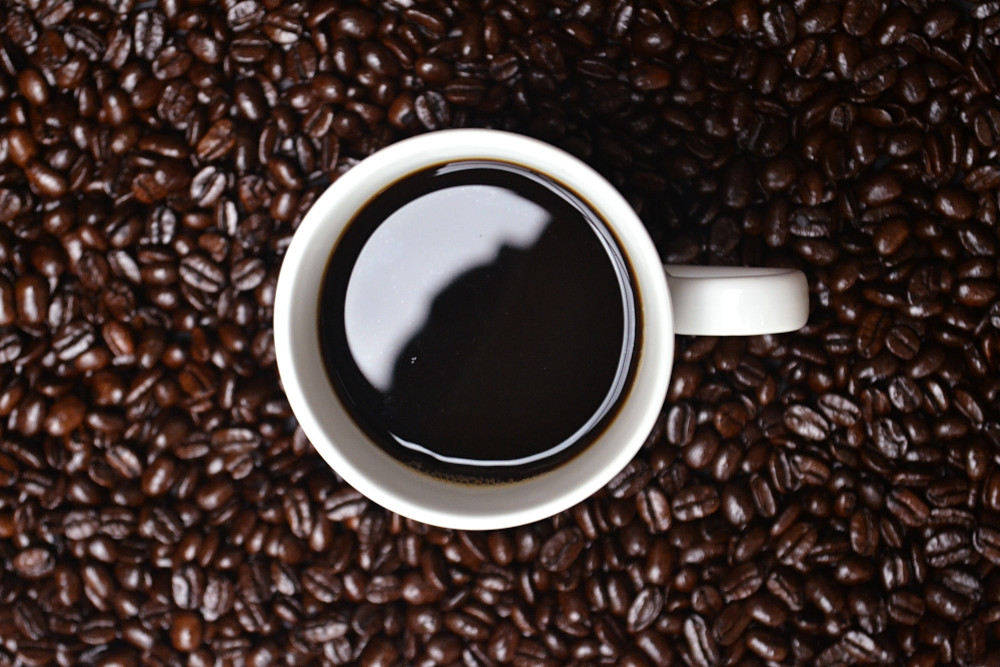
Now a little about coffee drinks, and we start with the most important — espresso. It is prepared in a special espresso machine that passes hot water, almost boiling, under high pressure through a compacted puck of ground coffee. The amount of water in an espresso is small, usually 30 ml per serving, and this is the most concentrated coffee drink — with a bright, pronounced flavor and aroma. The surface of a good espresso is covered with a light-brown crema. Not many of you order espresso in coffee shops, but baristas often brew it. Because espresso is the base for most other coffee drinks, such as macchiato, cappuccino, latte, and also the infamous Americano.
Why infamous? Because in modern coffee culture, which, I repeat, is very hipster, the drink \<\
By the way, it is also very interesting how such a name arose. The drink appeared during World War II when Americans landed in Italy. The thing is that in America, filter coffee is popular (we’ll discuss it later in the text), which is not as strong and is served in large portions. When the newcomers ordered coffee from the Italians, they were brought a tiny cup of espresso, which was unusual for them. Americans thought that they were simply not being poured enough coffee, and they did not perceive such a rich, intense taste. And in Italian coffee houses you could often hear, “Oh, here come the Americans again, pour them some water in their coffee!”
However, it should be noted that despite all the coffee “snobbery,” today Americano certainly deserves a place and has its own consumer, because the taste of Americano still differs from that of filter coffee.
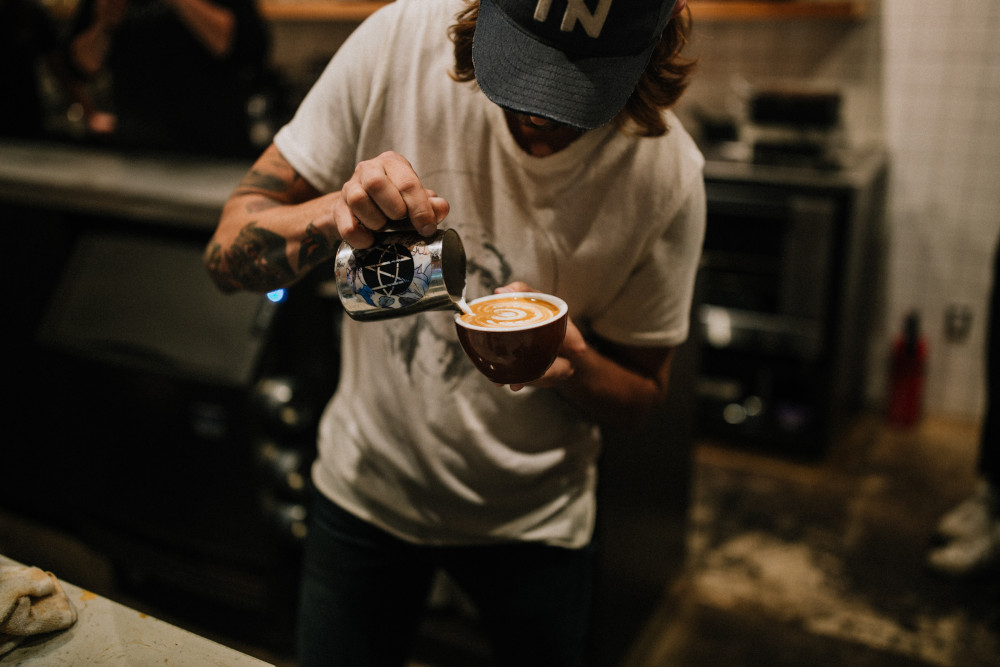
Now about milk-based coffees. Macchiato, flat white, cappuccino, latte — all of them are made on the basis of espresso and differ fundamentally in the ratio of espresso to milk. Macchiato is a small coffee drink, basically the same espresso with a small amount (about 15 ml) of frothed milk, with a pronounced coffee flavor. And latte (Italian for milk) is the milkiest drink, where one shot of espresso is combined with a whole glass (250 ml) of milk. Cappuccino occupies an intermediate position (150 ml of milk) and is a drink with the most balanced coffee and milk flavor.
Speaking of Americano, we should also talk about filter coffee, which is very popular in the same America. The key to making coffee by this method is the use of a paper conical filter, into which ground coffee is placed, and then hot water (nearly boiling) is poured through the filter by gravity. The resulting drink is collected in a cup under the filter. Usually this coffee is brewed in drip coffee makers. Such a coffee maker heats the water to the required temperature, pours it through at the required speed, and the cup where the drink is collected is equipped with a warmer so the coffee does not cool.
However, there are almost countless variations on filter coffee — so-called alternative methods. These include French press and AeroPress, which use the force of a plunger to push coffee through a filter. Or V-60 — a method in which water is poured through the filter manually, without automation. By the way, the name V-60 means nothing more than a funnel with a 60° angle, exactly the kind we use in laboratories.
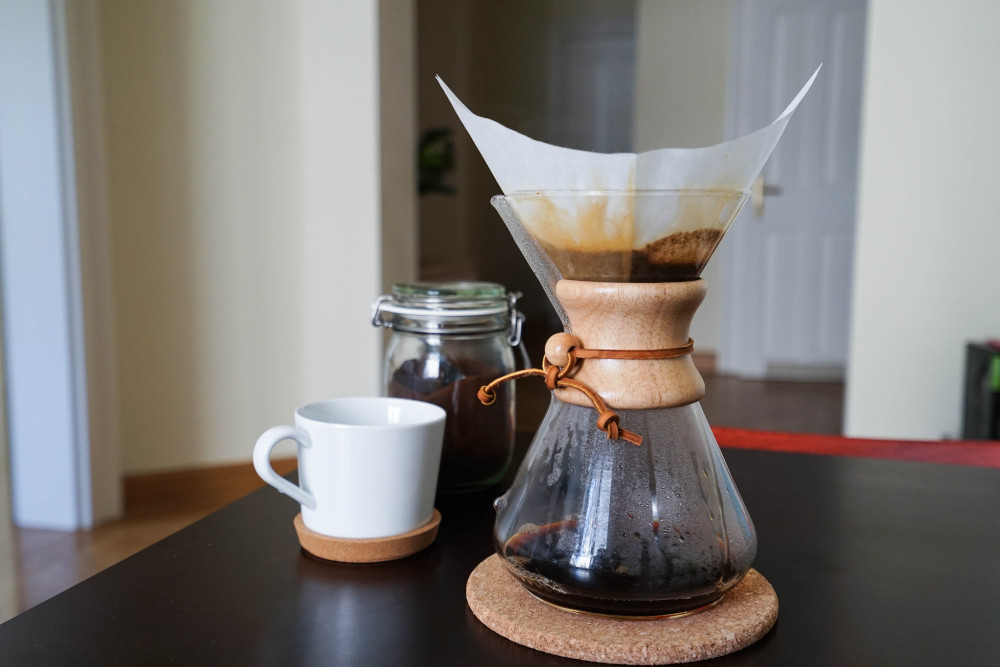
In any case, regardless of whether the filter coffee is brewed, in a drip coffee maker or by an alternative method, the taste will be approximately the same. And it is very different from espresso or Americano and from the first sip it is somewhat like compote.
Coffee and the Method of Preparation: what matters? Автомат, кавомашина, гейзерна кавоварка, джезва... в чому різниця?
All very simple, an automatic coffee machine, or simply the \<\
There are also ordinary espresso machines, which work on the same principle as in a cafe, only smaller, perfectly suited for home. But here you will have to do everything yourself. Grind the required amount of beans, or weigh the required amount of ground coffee, correctly form the puck, push the required amount of water through it... Be your own barista.
A geyser coffee maker (moka pot) — this is a special coffee maker for cooking on the stove. It consists of three parts: the lower reservoir, the funnel-filter, and the upper reservoir. In the lower part the water boils, and through a special spout it is driven into the filter filled with ground coffee, and then it ends up in the upper reservoir where the coffee is collected. The drink is very similar to espresso, but not as concentrated, because this method uses less pressure and more water than espresso.

But there is one nuance! Typically a geyser coffee maker has a special safety valve to release excess pressure. And if it is absent, as in old Soviet coffee makers, or it does not work, this can lead to an explosion. But if you like explosions, as I do, you might not worry.
And finally, the cezve. It is very cool — because it is an old-school charm and the first alternative that is easy to prepare at home. Accessible to everyone.
Are there any life hacks to prepare the tastiest coffee at home without a coffee machine? How to choose it, after all?
In my opinion, if there are no devices at home, the best is to brew coffee in a cup. And the second simplest option available to everyone at home is the cezve.
Now about how to choose. It is important to consider that the degree of roasting has a greater impact on flavor than the variety of the same Arabica. Because it is during roasting that the flavor and aroma we all love appear. Heating breaks down the starch molecules that are part of coffee beans. Then the formed oligosaccharides break down into simple sugars, caramelize, and participate in the Maillard reaction, producing a whole bunch of chemicals that give coffee its aroma, color, and flavor. One of the most fragrant molecules is (furan-2-yl)-methylthio. Interestingly, substances belonging to the thiol class usually have a very unpleasant odor. But this little molecule is unique and it is thanks to it that we owe the beloved coffee aroma.
In short — there are three main degrees of coffee roasting: light (light brown), medium (brown), and dark (from dark brown to black). Lightly roasted coffee will be the softest with a pronounced acidity. The darker the roast, the less acidity and the more robust and bitter the taste. Sweetness peaks at medium roast, because in such conditions the maximal amount of sweet oligosaccharides and simple sugars can form from the starches, which, however, have not yet burned as in dark roasting.
The aroma also depends on the roast level. Light roasts feature light fruity, floral, and berry notes. Medium roasts emphasize nutty-chocolate notes, caramel, spices, cocoa aromas. For dark roasts, smoky, resinous aromas are characteristic. By the way, at dark roast you won’t notice any difference between Arabica and Robusta, because the taste will be the same — bitter and smoky.
It can be said that the medium roast is the most balanced, as it doesn’t show as much acidity as light roast, has maximum sweetness, and lacks the excessive bitterness characteristic of dark roasting.
For the richest taste and aroma, it is best to buy freshly roasted beans from a café where you like the taste of the coffee you brew, or from a roaster, and grind them yourself right before use. Because the aromatic compounds formed during roasting react relatively quickly with the air’s oxygen, and over time the taste of coffee deteriorates. Whole beans, stored properly in a dry place in a tightly closed bag with a vent, will preserve the flavor best. European roasters claim a shelf life of 2–3 months for roasted coffee beans. If you cannot grind coffee yourself, you can have it ground where you buy it, but in that case don’t buy a lot at once, because ground coffee loses its flavor much faster.
Of course you can buy coffee in supermarkets, but in any case it will be significantly inferior in flavor to freshly roasted coffee.
When buying whole beans, it is important that the beans are of the same color; there should not be a large amount of broken, defective beans in the bag — if they are present in large quantities, this is a bad sign; defective beans can spoil the drink’s flavor. The bag should have a special valve that releases carbon dioxide and does not let air inside (note: carbon dioxide is absorbed by the porous structure of the bean and if it was packed freshly roasted, the released gas can rupture the bag if there is no valve). Pay attention to the production date, because the fresher the coffee, the better.
Also the drink's taste is influenced by its grind. It affects the extraction process, or, more simply, the brewing. For coffee prepared in a cezve or simply by soaking coffee in a cup, the finest grind is optimal — a powdery grind. Medium grind is used for espresso machines, which have a metal filter, and if the particles are too fine, they will pass through or simply clog it. The coarsest grind is used, for example, for drip coffee makers.
What happens to coffee when you add milk?
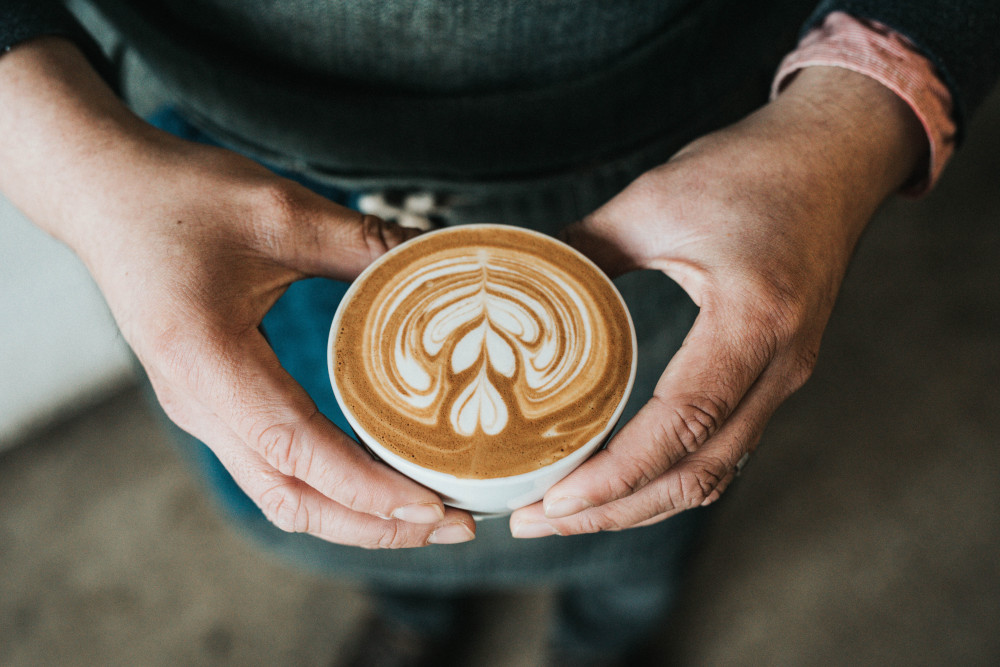
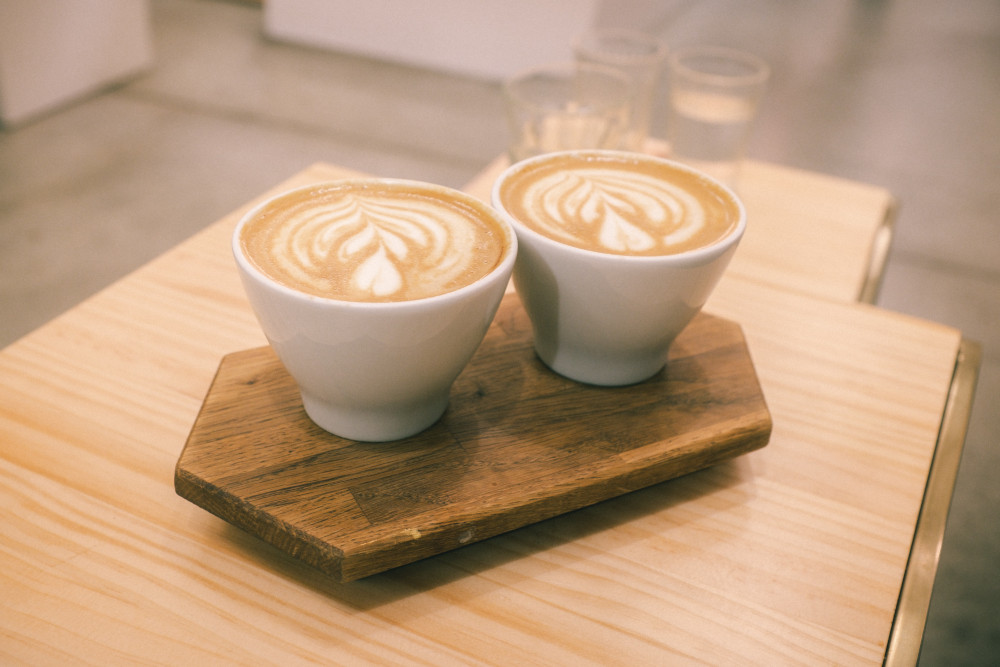
Milk flavor goes very well with coffee, softening it, and this opens up the possibility of preparing a whole range of coffee drinks with different coffee/milk ratios, each with its own fans. Also in modern coffee culture, frothed milk is used, and when combined with espresso it allows creating a design on the surface of the drink called \<\
And alcohol?
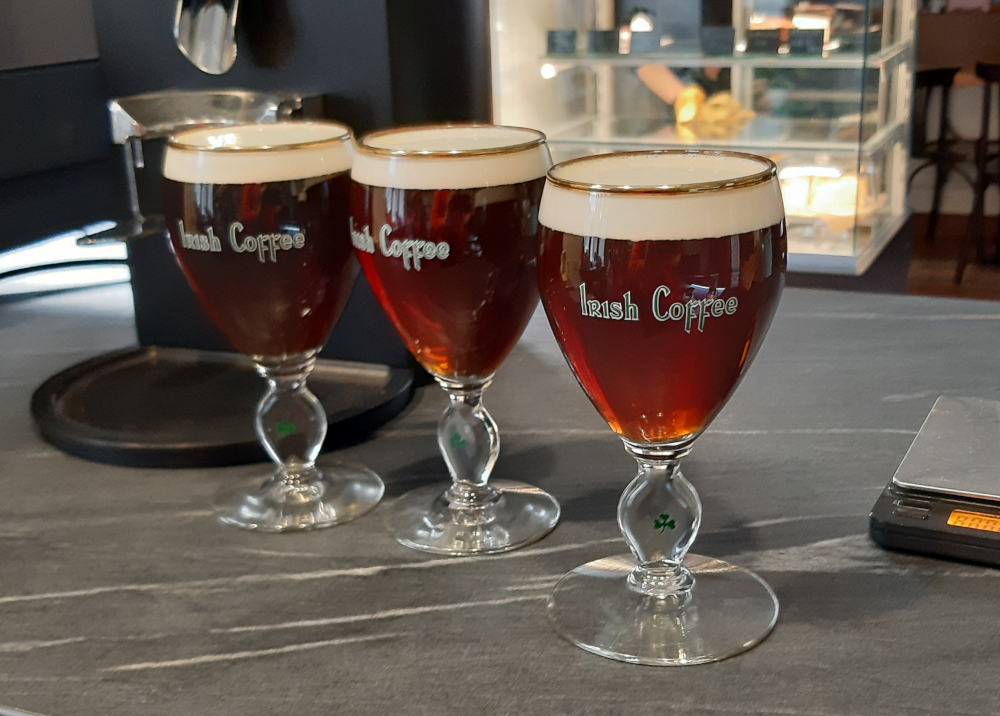
...Then you can get one of the most popular and delicious coffee drinks — Irish coffee (and here Gleb even promised us his favorite recipe for this drink)
Regarding the effect of such a mixture on the body, you should consider that k****awa may slightly mask the effect of alcohol, but in no way neutralizing its negative effect. Therefore, to avoid an awkward situation, it is best not to consume any other alcoholic drinks during this period, because it will be hard to gauge your level of intoxication.
So how much can you drink then?
If with whiskey, then probably not a lot. In general, caffeine intake is what limits coffee consumption. According to recommendations in an article published in EFSA (European Food Safety Authority), a safe maximum intake of caffeine is 400 mg per day for adults and 3 mg/kg per day for teenagers. Is that little or a lot? In reality, the caffeine concentration in coffee can vary within a very wide range, depending on the type of coffee, the variety, roasting, grind, and method of preparation. On average — a double espresso contains 100 mg of caffeine, which sums to about 4 cups of double espresso per day. But again, everything is relative, because caffeine content can vary greatly. Also some people, especially delicate and untrained, have increased sensitivity to caffeine, and they may feel uncomfortable symptoms such as rapid heart rate after just one cup.
Can you drink coffee on an empty stomach?
Not advisable, because coffee, with its strong taste and high caffeine content, strongly stimulates the production of gastric juice. And since there is nothing else in the stomach besides coffee, the stomach begins to digest itself a bit. Although the stomach lining renews itself quickly, the more often we force it to renew, the higher the likelihood that during cell division a genetic error will occur. As Professor Dosenko said, coffee and a cigarette in the morning are a direct path to stomach cancer.
And when is it better to avoid coffee?
First of all, if a person has stomach diseases. Because caffeine increases gastric juice secretion and will worsen the condition. Caffeine raises blood pressure and speeds up heart rate, so coffee is not recommended for hypertension, atherosclerosis, heart diseases, and glaucoma. And the stimulating effect of caffeine will definitely be harmful if a person suffers from insomnia. It is also recommended to limit coffee intake for pregnant women, children, and teenagers. In such cases, it is best to seek advice from your doctor.
It is also worth monitoring your coffee enthusiasm if you have turned this ritual into an excuse to eat something sweet, because we know that excessive consumption of sweets is not good.
How to drink coffee with maximum benefit?
It is important to be honest with yourself — coffee is not an essential nutrient for our body. We drink it for the pleasure of taste and the stimulating effect of caffeine.
A common belief is that coffee is healthy because it contains antioxidants. While polyphenols with antioxidant properties are indeed present, you should consider that the portion of polyphenols from coffee in our diet is minuscule.
So drink the coffee you like, and don’t overindulge in tempting things like pastries or whiskey. And of course, if you have no contraindications.
Preferably drink coffee after a meal to avoid stomach irritation. Also, it’s good to wash coffee down with water, not only because coffee can stain enamel, but also to prevent thirst — caffeine promotes water loss from the body.
Chemically, it is clear that you should not overdo it with overly roasted coffee, because burnt products are certainly not vitamins. At the same time, some data suggest that phenylindolamines are present in coffee, which are hoped to slow the progression of Alzheimer’s disease. Moreover, in more roasted coffee the amount of these substances was higher. Such is the contradictory information.
*And most importantly — remember that coffee does not give us energy, it only masks our fatigue for a short time. If you work on coffee, this will not increase your real productivity, but can easily lead to exhaustion of the body. **Therefore drink coffee, be inspired, enjoy it, and remember that no coffee will replace a good breakfast and a healthy sleep.***