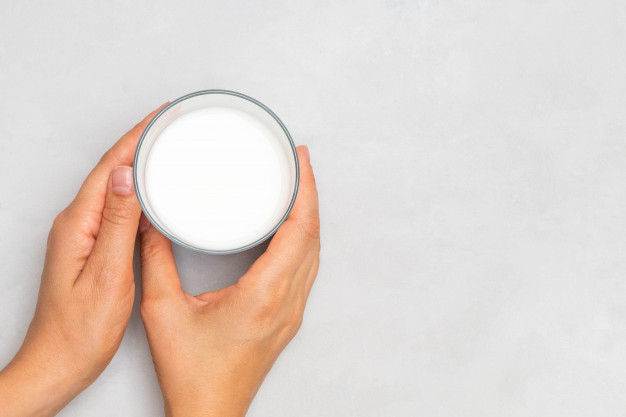
What a Beast—Kefir?
Who’s there?
Kefir contains up to 50 different species of lactic acid bacteria, acetic acid bacteria, as well as yeasts (aren’t you afraid of yeast? If by any chance you are, here’s more about them).
The most common residents of your glass of delicious drink are Lactobacillus kefiranofaciens, L. kefiri, L. helveticus, Lactobacillus buchneri, Lactococcus lactis Acetobacter, Leuconostoc sp. Enterococcus sp., Saccharomyces cerevisiae, Dekkera anomalus.
In the process of making and storing kefir, a true chronicle unfolds: first one group of microorganisms predominates, then another. For example, in the early stage one species of lactobacilli (Lb. kefiranofaciens) numerically dominates over all others, and in the end the “winners” are the leuconostocs (L. mesenteroides), which give the product greater thickness and aroma. Therefore, depending on its “age,” kefir can be more or less sour, thick, and fragrant.
The mysteries of the microbial “pyramid”
Another wonder of kefir microbiology is the kefir grain. It has an irregular cauliflower-like shape, consisting of numerous hollow spherical structures with a diameter of 2–9 mm. These spheres form a multifaceted network. Their matrix is composed of exopolysaccharides (predominantly kefiran), as well as proteins and remnants of microbial cells.
Interestingly, the mechanism of forming such a stable consortium that preserves its functionality indefinitely is not yet understood. And so far all attempts to generate a new kefir grain during fermentation of mixtures of pure starters have not been successful.
Currently it is believed that lactic acid bacteria and acetic acid bacteria are responsible for the production of polysaccharides and biofilm, while yeasts themselves build this intricate lattice.
Gifts of collaboration
Kefir is a fairly stable and strong microbial community. And this is ensured by the very effective cooperation of its members.
Interactions among kefir microorganisms contribute to increasing their stress resistance and viability. For example, it has been shown that S. cerevisiae (yeast) can significantly increase the viability of the probiotic strain Lb. rhamnosus HN001 under conditions of increased acidity.
And being together for yeasts (S. cerevisiae) and Bulgarian bacillus (Lb. delbrueckii) means better tolerance to such adversities as low pH and the presence of ethanol in the environment. Lb. kefiranofaciens in the presence of yeast more readily produces its signature exopolysaccharide kefiran.
Another great example of mutual assistance is the [utilization of lactic acid by yeasts]. We know that lactic acid bacteria eat lactose in milk and produce lactic acid (that’s why they’re called lactic acid bacteria). But as metabolic byproducts accumulate in the environment, the lactic acid bacteria gradually struggle. Interestingly, the problem isn’t even acidifying the environment, but the lactic acid itself, because when a basic solution is experimentally added to the environment to adjust pH, the lactobacilli don’t feel better. But here yeasts come to help—they don’t eat lactose, but they can use lactate molecules as a source of carbon. Thus the concentration of lactic acid falls, the lactic acid bacteria regain their vigor and reproduce, and the yeasts are fed as well. They also reward the lactic acid bacteria with treats—some vitamins, growth factors, and essential amino acids. It’s especially interesting that they sometimes do this only in the presence of each other!
Another example of close and mutually beneficial cooperation is the Bulgarian bacillus and thermophilic streptococcus, which find common ground not only in classic yogurt but also in kefir—coexistence allows them to more easily and effectively metabolize peptides.
At first glance, this all resembles idyll, but here political-like games can also unfold. For example, Lb. kefiranofaciens readily befriends and supports the leuconostokes and lactococci, but for some reason suppresses another lactobacillus — L. kefiri.
Similarly, some yeasts are loyal to other community members, but they can be hostile toward their relatives.
Kefir for us
Beautiful stories about the life of kefir’s micro-civilization are great and interesting, but how does kefir affect our macroorganism?
And here it seems everything is fine.
Like other fermented dairy drinks, kefir has much less lactose than milk. Therefore it is well tolerated by people who have lactose intolerance.
The wide range of organic acids and bacteriocins have antimicrobial activity against a broad spectrum of pathogens — Salmonella, Staphylococcus, Proteus, Listeria, and Candida. Some authors, evaluating the results, even consider them comparable to the antibacterial action of penicillin or gentamicin!
Even diluted kefir suppresses the sporulation of filamentous fungi—Aspergillus (and therefore aflatoxin production), which allowed this wonderful microbial association to be used as a natural preservative. And the organic acids of kefir also convert aflatoxin into a less toxic form. (But, just in case—that is not a call to chase moldy bread with kefir. Remember that mold-containing products should not be consumed.)
Animal studies also show that consuming kefir increases the population of lactic acid bacteria in the gut microbiota and decreases the number of enterobacteria and clostridia.
A month and a half of daily kefir in a glass regime reduces inflammatory markers in the blood, the rise of which is known to occur in many chronic diseases.
Regular consumption of kefir positively affects blood sugar levels and may be useful as an adjunct therapy in preventing diabetes (positive effects were observed in studies with 600 ml of product over 8 weeks).
Kefir helps our gut reactively rid itself of yesterday’s dinner (test subjects who consumed 500 ml daily for a month noted a significant improvement in constipation symptoms).
And also, kefir consumption may be one of the preventive means against the development of colorectal cancer. In animal experiments, kefir consumption somewhat reduced tumor growth, increased levels of immunoglobulins A, and aided the restoration of the intestinal mucosa after experimental irradiation.
What about applying kefir after sunbathing? Again, in experiments on these poor animals, kefir showed fairly good wound-healing and antimicrobial properties for the skin. However, it’s better not to bake in the sun.
What not to do?
Kefir is often attributed with somewhat magical properties in terms of weight loss. And indeed, if you replace a burger with kefir in your diet, magic will happen. However, don’t go overboard and arrange fasting days on kefir!
Both kefir and stomach juice have a low pH. Without other food, our hungry stomach will produce more gastric juice and digest its own mucosa. It will try to recover, of course, but there isn’t much joy in that. Of course, you will lose weight, but also because you won’t be able to eat much.
So, as they say, consume responsibly and may the kefir zen be with you!