Why Fiber in the Diet Really Matters?
Strangely enough, there is no single definition of fiber right now. Different sources and researchers attach different meanings to this word. Another popular term is “dietary fiber,” as translated from Western sources (diet fiber). If we simplify for us, the consumers, fiber, or dietary fibers, are the plant polysaccharides that we humans cannot digest because we lack the corresponding enzymes. Chemists would pedantically add a remark that these are polysaccharides with 10 or more sugar units in the chain. However, on food product labels, the section “fiber” also includes oligosaccharides, which have up to 10 sugar residues in the chain.
So, in order. The earliest references to the importance of fiber in the diet can be considered the observations of Hippocrates: “when consuming whole-grain bread, the amount of feces is greater than when consuming bread made from refined flour” — thereby emphasizing the importance of the byproducts of flour production for the prevention of constipation.
After almost two thousand years, chemists took on the task and classified as fiber everything that remains from a plant matter in a test tube after the action of acids and alkalis. They also produced an elaborate classification that eyes cannot help but to adore! Those who wish to enjoy it fully — we invite you here or here.
We will limit ourselves to distinguishing the so-called soluble and insoluble fiber.
They differ primarily in their ability to dissolve in water, and accordingly — in certain effects upon their consumption.
Classic examples of soluble fiber are pectin, gum (no, not about a district), and mucilage. The first two names you have definitely seen in the composition of some desserts (guar gum). Together with water, pectin or gum forms gels and are used in food production as thickeners. By the way, they are also sold as dietary supplements, but at a somewhat different price. An example of soluble fiber is mucilage that flaxseed lovers may observe.
Soluble fiber is not digested by our enzymes, but it is readily consumed by the bacteria of our gut.
Insoluble fiber is most often represented by cellulose, hemicellulose, lignin. It does not dissolve in water, does not form a gel like soluble fiber, and is not digested by most of our microorganisms. However, for example, the microbiota of termites can break down cellulose — for themselves and for their swift hosts, enabling these insects to so deftly crush wood. Therefore, “dysbiosis” for termites is a threat of starving death.
It works
Hippocrates really was right — fiber saves us from constipation. The body carefully tries to extract everything from the consumed food, instead sending certain byproducts of metabolism to the intestine. And to have them excreted successfully, a carrier is needed. This carrier is fiber — that same insoluble one. In addition, it serves as a kind of trainer for the walls of our intestines, supporting their tone and … providing prevention of diverticulum formation. These are pockets that can appear in the intestine and subsequently become clogged and inflamed. According to statistics, about half of people over 60 have diverticula in their intestines, with 10-25% developing the unpleasant and life-threatening diverticulitis. However, the cited statistics refer to the "progressive Western society," which sees fiber more often in jars of dietary supplements rather than on the dining table. Among residents of Africa and Asia, diverticula are found in less than 1% of the population.
Be that as it may, the latest meta-analyses on this topic state that consuming 30 g of fiber per day reduces the chances of creating labyrinths in the gut by 40%.
Fiber intake also contributes to satiety, because it is formed not only by the rise in blood glucose but also, for example, by the degree of stomach distension. That is why with constant overeating it is hard for us to feel full with a smaller portion (calm down — to some extent this process is reversible). Fiber, technically, provides volume to the food and “convinces” the walls of our stomach that we are already full. And it is quite expected that fiber in the diet is a wonderful prevention of excess weight.
Consumption of fiber supports [lowers cholesterol levels]. And this happens, at a minimum, in three ways. First, being an effective adsorbent, it simply absorbs part of the nutrients, which is very important when they are excessive. Therefore it is recommended to avoid overly fatty foods, and if you do consume them, do so with a good portion of salad. Second, due to the same sorption ability, fiber reduces reabsorption of bile acids from the intestine, thus forcing us to synthesize them anew and use the cholesterol stores that would otherwise be floating in our blood. And, third, our microbiota, in the presence of fiber, synthesizes short-chain fatty acids (SCFAs), which enter the bloodstream and reduce cholesterol synthesis in the liver.
And, of course, about the microbiota: soluble fiber and oligosaccharides are excellent food for our bacteria, specifically for the kinds that are friendly to us. Fiber consumption is associated with an increase in the diversity of the gut microbiome, which, in turn, affects its stability during challenging times of antibiotic use or stress.
It has also been shown that low diversity of the gut microbiota correlates with higher body mass index and inflammatory processes in the gut.
As we already wrote earlier, the aforementioned SCFAs are the food for intestinal epithelial cells and also signaling molecules for enteroepithelial cells, which synthesize for us the "happiness hormones." These SCFAs also affect the T-cell arm of our immune system and thereby exhibit a local anti-inflammatory effect.
All these numerous effects truly allow us to speak of that whole plant pulp as a panacea on a local scale — here you have both prevention of cardiovascular diseases and intestinal ailments, plus mood improvement.
Now, about the practical: how much and what to eat?
- Vegetables-fruits-greens-whole grains — as much as possible.
- Do not get hung up on soluble vs. insoluble fiber. Both are needed to roughly the same extent.
- Moderate thermal processing does not “kill” fiber, but sometimes changes the ratio of soluble to insoluble in favor of the former. It is fair to say that soluble fiber partially ends up in the water solution when boiling. This is not so bad if you are cooking borscht, but if you boil vegetables and pour out the water, then steaming is the way to go.
- About fiber “from jars”: if you have to choose between the absence of fiber in the diet and a “jar,” of course it’s better to have something. But, instead, consuming foods that contain fiber is not only more balanced and much cheaper, but also a source of other valuable nutrients — proteins, fats, vitamins, and trace elements.
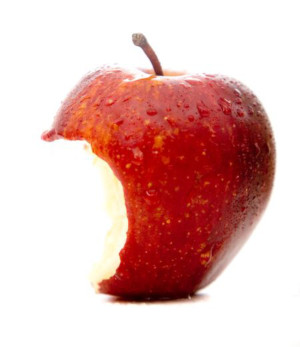
- Recommended daily fiber intake is about 25 g per day (based on a 2000 kcal diet). For example, one apple, banana, orange, or carrot contains 2-4 g of fiber depending on size. Tables with fiber content in various products are here and here.
Congratulations, you’ve read this to the end! And now “take a pause — eat … an apple! :)